Pets and Chronic/Mental Illness.

Pets and Chronic/Mental Illness.

You know the people that are more comfortable with animals than people; the type of person who sees a cat in the street and has to greet it, the person stood talking to farm animals or cooing at birds in the garden?  That’s me.  I’m an animal person.  As a person with awful social anxiety, I’ve often turned to animals for companionship and socialisation.  I’ve never not had pets.  Growing up, I had so many different pets and it made me love all different types of animals.  As a shy child and teen, my pets were my friends.  Now I’m 28 and suffer with chronic health conditions, pets are still my joy and my companions through tough times.

When I first started suffering from chronic health issues, I worried that pets wouldn’t be an option for me anymore.  My fatigue was overwhelming, and I couldn’t see how I would cope looking after animals when I was struggling to look after myself.  But at the same time, I needed my animals because I was struggling to accept my illness, mentally I was low and the physical pain and fatigue occupied all my thoughts.  My pets gave me something else to think about, something to stay motivated for and something to lift my spirits.  My pets were the only thing I could really feel joy for, the one thing that made me happy when I was struggling to live life like a normal young adult.  I’d see friends and people my age out socialising, spending all night drinking and partying and it was hard to not be a part of that, to be limited by my health, my own body.  I felt like I was a broken person, fighting my own body and fighting health professionals who were judgemental and ignorant of M.E.  At that point in my life, I needed my animals to keep me going more than ever and they were, and still are a huge factor in my happiness and mental health.

I first got rats as pets when I was 17, I was a psychology student and learning all about medical research studies involving rats as participants, sometimes experiments that killed them or put them through stress and suffering.  All to better understand our own brains and the medical treatments that would be beneficial for us.  I just fell in love with the species, their intelligence and social nature.  So, I got a pair of rats and 11 years later I still have rats, I’ve not been without them since.  Rats were a pet that I had before I developed M.E and I was worried I’d have to give them up when I got ill.  I have my family to thank for initially allowing me to continue to keep them, they helped with the cleaning out and feeding when I wasn’t well enough.  They still help me when I need it.  Having a bed full of rats would probably freak any normal person out but it was a regular joy for me, letting the rats out to free roam around the bedroom cheered me up and it was a way for me to exercise my pets and enjoy them from bed.  I compare having rats to having tiny dogs, they are extremely sociable and friendly, they are intelligent and each one has their own personality.  They are amazing pets, and I couldn’t imagine my life without rats.  They require a lot of stimulation in their cages and regular cleaning out which was sometimes a struggle for me but over the years I’ve found ways to adapt those things and make them easier for me.  I have a raised cage so I don’t have to bend as much, pull out base trays, a cage with big double doors so it’s completely accessible when adding hammocks and ropes.  In a way, chronic illness has made me think outside the box more, I’ve had to find new ways to do things and inventive ways to make things less strenuous or fatigue inducing. 
Luna was more of a spontaneous adoption; a kitten needing a new home.  I’d had M.E for a couple of years and I wanted a nap buddy, so I arranged to go get her and she’s been my best friend for 5 years now.  It wasn’t an easy experience; she came with a lot of issues I hadn’t anticipated.  She had a negative start to life, she was abused and abandoned, underweight and under socialised.  I’d stupidly hoped for a cuddly and affectionate cat immediately and she was the opposite; very frightened and distrustful of people.  She didn’t like being touched or picked up and was very aggressive to anyone coming into the house who wasn’t me.  It was hard because I relied on my family for support and care when I wasn’t well, and they couldn’t really help me because Luna would just attack them when they came in my space.  I thought about rehoming her but I’m stubborn and she’d already had such a horrible experience with people, I didn’t want to give up on her.  It took about a year to gain her trust, and a few years for her to accept my family being around.  She still won’t interact with strangers and she’s aggressive to anyone ‘new’ coming into my life but, with me she’s the most affectionate and cuddly cat.  She doesn’t leave my side, she’s a shadow that follows me around the house.  That companionship has been so important for me, M.E is so isolating and being housebound is the loneliest experience.  Luna has adapted so well to my illness, she’s so relaxed and cuddly when I’m having a bad day, she’s content to just lie with me in bed and provide company.  I can’t express how important that has been for me, that friendship and constant companionship during my time with M.E.

Lastly is my latest addition; Gizmo.  I’ve dreamed of having my own puppy for years, but my health has fluctuated so much that I’ve never felt confident enough to take on that responsibility.  Dogs need a lot more exercise and attention, and I never felt capable enough.  Then last year I decided that I wanted that experience, I don’t think I’ll ever have children and a dog felt like the next best thing.  Living with my parents, I knew I’d have that extra support if I needed it and I wanted a companion for when I’m able to take short walks and get outside.  So, I put my name down on a rescue puppy list and got a call to say there was a 16-week-old puppy, who’d been smuggled from Russia in a lorry, treated terribly and needing a patient, loving home.  I couldn’t refuse, I’m a rescuer, I can’t turn down an opportunity to ‘fix’ or ‘make something better’.  A year later and I can’t remember life without Gizmo.  I won’t lie, it was hard.  My health initially got worse with the extra activity and attention I was putting into a puppy.  I underestimated the effects of training and entertaining a dog, it took a lot of my energy.  But the thing I love about animals the most is that they adapt, and Gizmo has adapted so quickly to my routine.  He’s learned that I need to sleep in the day, and he’s made that his own nap time too, when I’m low energy he brings his toys on the bed to play with, he has just attuned himself to my fluctuating M.E and I think that’s amazing for a puppy to do.

The main thing my pets provide is unconditional love.  As someone with a chronic illness and an ‘invisible illness’, it’s common to receive a lot of judgement and unkind words.  People can be cruel and unthinking; animals aren’t like this.  I feel like my pets accept my illness, they accept how my life is and where my limits are and don’t love me any less for it.  Pets certainly make my life with chronic and mental illness more bearable. 

Blame the rats – Language in mass media.

Blame the rats – Language in mass media.

“Covid warning as Omicron variant ‘can bind’ to rats sparking horror plague fears”

https://www.express.co.uk/news/science/1536395/covid-warning-omicron-variant-bind-rats-ace-receptor-plague-coronavirus-latest

Let’s begin with the title of this news story.  I hold a BA (Honours) degree in English Language and Literature and a good portion of my studies focussed on language in media.  The issue with media in this day and age is that it’s mass.  There are thousands of news outlets all competing to be the first to report a story and to have the best write up of that story.  By that, I mean that news outlets compete for the publics attention and to do this, to grab your attention and encourage you to read their story over the same story on a different news outlet; they use emotive and vivid language.  Vivid language and imagery draw on the emotions and connotations of a word, to encourage a negative or positive evaluation in the reader or listener.  In our technological world, online news outlets use click-bait titles to attract attention and make an individual click on their news outlets story. The title above uses this click-bait mentality by placing the word: ‘warning’ right that the start of the title.  Everyone knows that the word ‘warning’ is used as a danger signal and our brains are more likely to pick out these ‘danger’ words for our own safety and security.  So, by placing the word ‘warning’ at the beginning of the news title; it encourages anybody scrolling through news feeds to click.  It’s instinctual for someone to click on an article or news story that warns them of potential danger. The news story goes on to use three vivid and emotive words together at the end of the title, so it stays on your mind, so it leaves a bigger impact.  The phrase ‘horror plague fears’ delivers an impactful ending which can only be meant to encourage a feeling of fear and anxiety in the reader.  The words are not unbiased or neutral; they are words that only provide a negative connotation or reaction.  The news outlet uses this final phrase to instil a sense of fear and apprehension in the reader and push them to continue reading the article.

My aim at detailing the process and reason behind this news title is to illustrate the bias of news outlets today.  Each news outlet competes for readers and listeners, and they all aim to outdo each other by making their news article more dramatic.  The problem with this is that the main way to attract attention is by creating a culture of fear.  News outlets use emotive language and ‘danger’ words to create fear and make the public scared enough to read their article over other similar articles in the media.  It’s how mass hysteria is caused, by creating stories that promise danger and disaster.  The public then feel a responsibility to follow particular news outlets and stories to warn them of potential danger in the future. It’s why everything in news media has to be questioned and evaluated; because news is constantly blown out of proportion and exaggerated to attract attention.  The words ‘horror plague’ can do nothing but create images of death, mass illness and fear, reminding people of past events and tragedies. 

My other issue with this news story comes from my position as a rat keeper.  I’ve had pet rats since I was 17 years old and although the ‘fancy’ or pet rat is slightly different from a wild rat.  My opinion is that wild rats receive a lot of negative attention and blame.  They seem to provoke feelings of disgust, hatred, and fear.  My intention here, is not to negate anyone’s fear, there are millions of people who suffer with phobias of rats and similar rodents.  But my issue is in news outlets spreading misinformation and exaggerating facts to create mass hysteria surrounding a particular subject, in this case, rats and plague. 

“Rodents have also been carriers of plague” is a quote taken from this story that I think is misinformation.  Rats do carry various diseases that can be passed onto people, it’s well known.  I don’t dispute that; wild rats do pose some risk to humans in terms of illness and disease transmission.  However, the Black Death or bubonic plague being attributed solely to rats is wrong.  News outlets use this misinformation regularly on the subject of rats, making rats out to be malicious and disgusting creatures that spread plague and death.  It plays on people’s general fear of rats and exaggerates it to create fear and anxiety among society.  While rats did have an involvement in spreading plague, they did not cause it and it was fleas and lice found on rats (among other species) which held and spread the plague.  Why do we blame the rats?  If the lice and fleas living on the rats spread the plague; then why is it attributed solely to rats?  Fleas and lice also lived on human beings and other animals but because rats hold so much fear and disgust, it’s easier to just place the blame on their species.  In fact, 2018 saw National Geographic publish a story on research that instead indicated it was human parasites that primarily spread plague bacteria.  ( Maybe Rats Aren’t to Blame for the Black Death (nationalgeographic.com) ).  Even the BBC published a story on this research indicating that: “the Black Death, can be largely ascribed to human fleas and body lice” ( Black Death ‘spread by humans not rats’ – BBC News ).  My point is, news outlets tend to ignore research that disproves what they are trying to sell.  Instead of promoting this new research and adjusting their story and approach, they choose to enhance false information because it helps their intent to cause fear and draw attention.  Also featured in this BBC story is a quote from a professor which I think is very relevant today: “Understanding as much as possible about what goes on during an epidemic is always good if you are to reduce mortality in the future” and “Our study suggests that to prevent future spread, hygiene is most important”.  Why can’t more of this type of story be published in news outlets?  A positive story that promotes research and highlights how information can change as more knowledge is gained and as technology and science advances. 

The Covid news story does go on to say: “fleas carried by rodents are believed to have been responsible for spreading the bubonic plague” but it does not change the entire feel of the news story.  In a technologically advanced society where people are scrolling and taking note of news titles and such to stay informed; the title “Covid warning as Omicron variant ‘can bind’ to rats sparking horror plague fears” gives a completely exaggerated opinion and encourages overreaction and fear.  Why not just have the title: “Covid warning as Omicron variant ‘can bind’ to rats” and then providing the research?  Instead, the news outlet attaches words that spread fear and hysteria to sell their product and news story.  Not to mention the fact that this research indicates rats can become infected by the Omicron variant of Covid-19 but not how likely it is that they can spread it.  So, a title that gives the impression that rats are going to spread covid like the plague, is exaggerated and has no factual proof.  I also have an issue with the fact, the main picture accompanying this news story is an image of a ‘fancy rat’ and not a wild rat.  If you are going to report on a story about wild rats, then at least know what they look like and provide a relevant image.

I want to leave everyone with a positive thought on rats as a species. People forget that a huge portion of medical research is done on rats.  Rats have assisted in the development of countless medications and medical treatments which humans today.  I will leave you with a quote which I think highlights how more positive imagery and less hysteria led imagery needs to be used on the subject of rats: “The laboratory rat has made invaluable contributions to the cardiovascular medicine, neural regeneration, would healing, diabetes, transplantation, behavioural studies and space motion sickness research” ( 10 years of rat research – how stroke studies have evolved | Understanding Animal Research | Understanding Animal Research ).  See?  Rats aren’t all bad!  Let’s understand the whole story surrounding a subject, do our own research and not just rely on bias news outlets.  Mass media is to blame for so much of society’s fear and it contributes to so many of the mental health issues people deal with today.  That’s why fake news is so dangerous.  Language is a tool that can be used to do so much good and bring people together but, like everything, it can also be used in a negative and harmful way.  News outlets should be responsible for the harm their use of language can cause. 

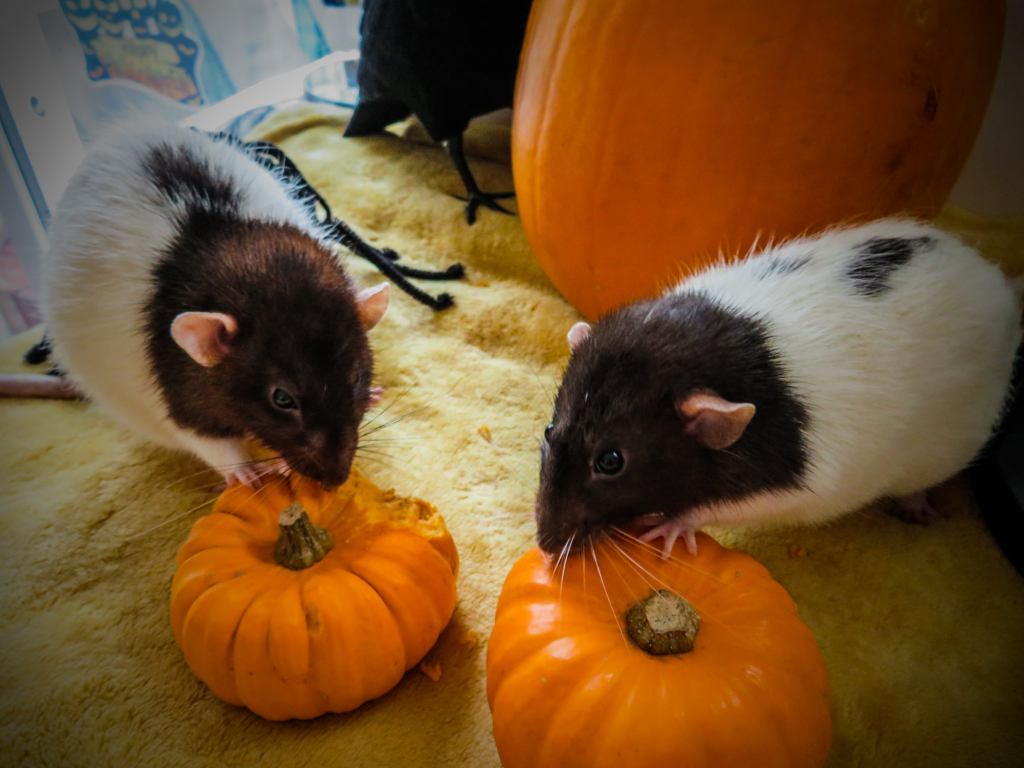
To end, enjoy some pictures of my little rat crew.