So it’s just a fatigue thing?

So it’s just a fatigue thing?

The title of this post is the reaction I often get when I tell people I have M.E, probably because of its other name ‘Chronic Fatigue Syndrome (CFS).  I hate that such a complex and multifaceted illness is always reduced to this one aspect.  It almost feels like I’m being belittled when someone refers to it as; just a ‘fatigue disorder’ and it’s so frustrating because M.E or CFS isn’t just one symptom.

It’s hard to change people’s opinions and the stigma that surrounds this illness.  A lot of people associate fatigue with tiredness and assume I just need to sleep more or take a nap.  I know a lot of people with M.E hear the line “I get tired too” as if we’re complaining about nothing.  Tiredness can be relieved by sleeping, it’s short term.  Fatigue is not relieved by sleeping or resting, it’s just there all the time.  It’s a bone deep exhaustion, a feeling of constantly swimming against the current, a complete lack of energy, a heaviness that doesn’t just lighten after resting.  Fatigue isn’t tiredness, it’s a much deeper and complex issue and it’s only one symptom that comes with having M.E.

A lot of people misunderstand this illness and don’t understand the span and range that it has over our bodies.  So I thought it would be useful to list the symptoms I experience with M.E:

  • Fatigue
  • Post exertional malaise
  • Muscle weakness
  • Sore eyes after looking at a computer or reading
  • Cognitive dysfunction (brain fog, trouble finding words, a difficulty in following conversations or communicating, trouble concentrating)
  • Nonrestorative sleep
  • Widespread body pain (muscle pain, joint pain, headaches, nerve pain)
  • Allodynia (Extreme sensitivity to touch or certain types of clothing)
  • Sensitivity to sound
  • Orthostatic intolerance
  • Poor temperature regulation
  • Flu-like symptoms (headaches, fever, achiness, enlarged and tender glands, sore throat)
  • Inappropriate sinus tachycardia
  • Cold hands and feet
  • Problems with balance and dizziness
  • Restless legs
  • Exercise intolerance
  • Hyperhidrosis

I experience all of these symptoms on a daily basis which is why I become upset and frustrated when people just refer to M.E as a fatigue disorder.  My whole life and my whole body is affected by M.E and it takes a lot of management to live with.  I wish more people knew this, I wish people didn’t hear Myalgic Encephalomyelitis (M.E)  or Chronic Fatigue Syndrome (CFS) and only recognise the ‘fatigue’ aspect.  It’s so disappointing and disheartening to see it referred to this way because it minimises the extent of the illness and plays down the impact it has on sufferers.

I’ll add a link here to a piece of literature on the M.E Association website, which lists all the symptoms associated with M.E, there are a few more listed here that I haven’t mentioned because I don’t suffer with them, but it may be useful to others:

A-Z-OF-SYMPTOM-MANAGEMENT-FEBRUARY-2020.pdf (meassociation.org.uk)

Gift ideas for gifting to someone with chronic illness.

Gift ideas for gifting to someone with chronic illness.

I wanted to put together a list ideas for gifting to those with chronic illness.  I know that Christmas can be a tough time for people with chronic illness.  However, I always love when someone buys me something that they’ve put thought and understanding into, something that is meant to make life with chronic illness more manageable or comfortable.  So if you know someone with chronic illness; here are my top gift ideas.

  1. Electric blanket or throw – A lot of people with chronic illness struggle with temperature control.  Since developing M.E I’ve really struggled to regulate my temperature and I find it really hard to warm up or cool down.  I suffer with constant icy skin and it can make muscle and joint pain worse.  I never thought I’d be someone who liked electric blankets, they seem dated…but I wouldn’t be without mine.  It’s one of the only ways I can warm myself up when I’m cold.  I use a full mattress covering underblanket that goes on your mattress and beneath your bottom sheet.  It warms the whole bed and I can put it on a few minutes before getting into bed.  It works really quickly and I don’t even need to have it on for half an hour before I’m feeling toasty and comfortable.  It’s a real life saver in winter.  Heated throws are a good option too, especially if you’re relaxing on the sofa and just need an extra boost of warmth. 
  2. Hot Drinks Maker – I have a coffee/hot drink machine that has made it so much easier to prepare hot drinks.   A lot of people don’t realise how just making a hot drink can be hard but in fatigue and pain disorders, it can be difficult.  I often can’t manage the energy needed to just stand and wait for the kettle to boil.  I also really struggle with muscle weakness so I struggle to pick up a kettle and pour it safely.  I like hot drink makers because it just involves putting a pod in the tray and putting a mug under the nozzle.  The water storage isn’t huge so I can fill it easily and it makes a drink in 30 seconds.  When my energy is low and I just need a hot drink quickly, it’s a huge relief to be able to make one easily and without much effort.  It’s those little things that allow me to be more independent and not rely on someone else to get me something.
  3. Pyjamas/ Lounge clothes – A secondary issue I experience with my M.E is allodynia which means I experience pain when wearing tight or restrictive clothing.  I know a lot of people with chronic illness who suffer with sensitive skin and pain to the touch.  So I find myself mostly wearing pyjamas or loungewear because it’s elasticated and it’s loose so it doesn’t set off my pain response.  I genuinely enjoy getting pyjamas for Christmas because I wear them so much and when you have chronic pain; any measure of comfort that makes you feel a bit more cosy or comfortable is welcome.  A huge hit with me is comfort bras because underwire really triggers my allodynia so sports bras and comfort bras that just have some padding but no underwire or clasps are another big relief.
  4. Automatic pet feeders – Pets can be a huge emotional crutch for people with chronic illness.  Chronic illness is very isolating and lonely so I know pets are an important level of support for chronic illness sufferers.  I couldn’t be without my pets and I’m lucky to live with family who take up a lot of the care responsibilities when I can’t.  But for people who don’t always have that support network, gadgets that make keeping a pet easier could be a really big help.  Automatic pet feeders are a great option because fatigue disorders make remembering things challenging at times, I often have to set alarms to remind myself of chores that need doing.  M.E in particular is a fluctuating condition which means you might be able to do something one day and then not be able to get out of bed the next.  Automatic pet feeders mean a chore is essentially done for you, saving you energy when you don’t have it and covering you when you are struggling to function.  Anything that helps someone with chronic illness live a bit more independently is a good gift in my opinion.  There are lots of pet feeders out there, with different storage capacities and timing slots so pick whatever works best for you or the person it’s for.
  5. EReaders – Chronic illness means spending a lot of time in bed or resting, it can be maddening not being able to do what you want to do.  I’m a massive bookworm and reading really helps me escape my daily life and that escapism is a huge mood boost.  EReaders are one of my favourite inventions because I can have all my books in one place, the device itself isn’t as bulky as an actual book and I don’t have to turn pages manually or hold a book open (which my muscle pain and weakness can make difficult).  Most EReaders allow you to enlarge text and change light options on the screen so it’s easier on the eyes and less likely to cause fatigue.  I prefer the paper-like screens on my EReaders because they aren’t too bright and it doesn’t feel like looking at a screen.  You can also do things like bookmark multiple pages, highlight quotes you like and it saves your progress in multiple books so you can switch between books depending on your mood.  It’s a really useful little gadget.
  6. Takeaway food gift cards –  A lot of the big food delivery companies do gift cards now which I think are a great gift option for someone with chronic illness.  There’s nothing worse than not having the energy to cook for yourself, feeling hungry but not physically being able to make yourself a hot meal.  Someone who’s experiencing a pain or fatigue flare-up may be physically unable to make themself something to eat.  I know I’ve skipped meals because I simply haven’t had the energy or capacity to make anything for myself and it’s miserable.  Takeaways can be a real life-saver for someone suffering with chronic illness.  A lot of people see takeaways as luxury but when you’re too ill to cook for yourself, they are more essential.  I know a lot of people who are disabled or can’t work because of illness struggle financially so ordering takeaways isn’t always an option.  So these type of paid gift cards make a really useful gift option for someone with chronic illness.
  7. Lap trays/ bed desks – Another useful and practical idea for someone with a chronic illness who may spend a lot of time confined to a bed or sofa.  It’s really hard to do anything from your bed without one of these.  When I was studying from my bed, I found it hard to use notebooks or computers comfortably.  You need a flat surface do a lot  of hobbies from bed.  Lap trays and fold up desks are really useful in this situation.  I used a small lap desk that was padded underneath so it was comfortable to use and not too big.  I also use the fold up tables that just go over your legs which can be really useful to avoid stooping over and getting back/neckache when using a computer or writing. 
  8. V pillows, lumbar cushions etc – Chronic pain can make sitting or laying in one position for too long impossible.  Supportive pillows can be a really useful thing for someone with chronic pain.  I couldn’t be without a v-pillow in my bed because I suffer with awful back pain; the way it can curve around my back and provide extra support helps my pain levels a lot.  I find lumbar cushions useful when I’m relaxing on the sofa because I often need that extra back support to be comfortable.  There are so many cushions and support pillows out there and they do make a really big difference to someone with chronic pain, so they make a thoughtful gift.  Just try and find what works best for the person you’re buying for, where their pain may be worse and what cushion would best assist or provide support in this area.
  9. Window bird feeders – Again, being confined to bed can be very boring and it can be depressing just seeing the same four walls for long periods of time.  I bought myself a window bird box when I was struggling with a flare up and I was sick of being stuck inside all the time.  It was just a square transparent box stuck to my window but it brightened my days up so much when birds stopped by.  I’m a huge animal and wildlife lover and I really miss those things when I’m bed or housebound for long periods.  Seeing these birds visiting my window everyday just lifted my mood during those times and let me feel closer to nature despite being stuck inside.  Birds are excellent and finding new food sources and telling all their friends so I had small flocks visiting in no time. 
  10. Streaming channel subscription – There are so many great streaming channels out there now and a subscription makes a great gift for someone with chronic illness who may be housebound.  Being housebound because of illness can be so miserable and lonely, it can really impact mental health.  I think any distraction is welcome in this case, anything that means that person isn’t just sitting with only their thoughts to keep them company.  Streaming services give someone with chronic illness a way to escape and think about something else for a while.  A lot of people subscribe to these channels and it’s an entertainment must have these days, but for someone whose stuck inside feeling ill, it’s a window to somewhere else.  That’s why a subscription to any of these channels is a fun gift option for anyone, but particularly for someone with a chronic illness who needs that entertainment and escapism.  

I hope this list inspires you if you’re struggling to buy for someone with chronic illness.  I think any gift that makes life a little easier or comfortable for a chronic illness sufferer is a great gift.  Just think about what they struggle with and how that struggle might be made a little less exhausting or painful for them.  I love practical gifts that allow me to be a bit more independent or make simple chores less energy draining. 

M.E and Winter Illnesses

M.E and Winter Illnesses

If the covid pandemic taught us anything, it’s how dangerous germs can be; how easily they can be passed on and left on surfaces and how quickly they can spread.  I hoped that this would be a fact that stayed with people after the pandemic and that, people would think more carefully about how they interact with the world when fighting a virus.  Unfortunately I think it’s something that the majority of society has pushed to the back of their mind, ‘now the pandemic is over and done with, what’s the big deal?’  Unfortunately though, covid isn’t the only virus out there that can make people really unwell and there are still people out there with compromised immune systems and those struggling with a chronic illness like I am. 

Every year, that inevitable time of year comes when everyone seems to fall ill with a cold or similar winter virus and I dread it.  I love autumn and winter but winter illnesses can make these seasons risky for me.  My M.E was triggered by a virus 8 years ago, which highlights the fact that although viral illnesses may be short term; they can have real long term consequences on the body.  I used to be a fairly healthy person, I’d catch the common cold and get over it quickly and life would go on regardless.  I miss my body’s ability to fight off viruses so effortlessly and quickly.  Now, a simple cold can be a real detriment to my health, it can cause a full relapse of my chronic illness, it can undo all the work I’ve done to manage my M.E.  It doesn’t matter how much progress I’ve made with my illness because a simple virus can eradicate it all and leave me back at square one, possibly bedbound and unable to live my life properly.

One of the things during the pandemic which I didn’t find novel was the question “any fevers, coughs or runny noses?” when trying to book an appointment somewhere. I’ve asked family and friends a similar question every winter since I became ill with M.E because when living with a chronic illness that makes fighting off viruses and other illness difficult; it’s all about minimising the risk of contracting anything.  I’m sure some family and friends have thought me paranoid or dramatic but I have to do what I can to avoid winter viruses.  I know it’s pretty inevitable that I’ll catch something over winter and more than once, that’s life.  But, I get really frustrated when someone who is evidently unwell takes no precautions to protect other people who may be less overall healthy than they are.  I’m not sure when people became so selfish, where did a thought for others stop entering people’s minds?  Covid should have taught us how easily it is to spread a virus, how badly it can impact some people.  It’s a lesson that I hoped would stay with more people, that would encourage people to think about others, to be more aware of germs and the ways illnesses are spread. 

My blog post today is motivated by an experience at my local supermarket last week, an experience which really annoyed me and made me want to just hibernate away all winter.  Within minutes of walking into the shop I witnessed a woman blowing her nose and coughing.  A fairly normal sight for the colder months but this woman was making no effort to cough into her hands, or sneeze into a tissue.  Instead she was picking up food, coughing all over it then placing it back on the shelf.  She did it dozens of times and she didn’t even seem aware of the fact she was spreading hundreds or thousands of germs over these food items then just putting them back for others to potentially touch. It’s that ignorance that frustrates me because there was clearly no awareness of what she was doing and therefore no attempt to minimise the risk to others. The worrying thing was, I saw a few people coughing and sneezing without an attempt to cover their mouth or nose, there were a few customers who seemed to have a cold or similar illness but not be worried about spreading it on to others instore.  I completely understand that the majority of people have to get on with life when they have a cold or virus, if you’ve got to go out to a public place then you’re entitled to do that.  I just don’t understand why it’s so difficult to carry a mask if you know you are unwell and it may be contagious, we know how important mask wearing was in preventing the spread of covid.  It’s a simple thing to just put a mask on and protect others, it’s a simple way to limit the amount of germs you are spreading when ill.  Even coughing into your hands or sneezing into a tissue is preferred over freely coughing and sneezing into the air; that’s something I was taught when I was a child.  My Mum manages a shop and it’s shocking how many customers come in and when asked how they are, reply; “Oh I’ve got this horrible virus, I’ve been really ill” or variants of it.  It’s scary to me, how many people have no issue going out and potentially passing on their viral illness to someone vulnerable.  I’m not saying that someone with a virus should lock themselves away, I’m saying that the pandemic taught us so many ways of limiting the spread of germs and everyone seems to have completely forgotten them.  Social distancing, mask wearing, carrying sanitizer, coughing and sneezing into a tissue and disposing of it afterwards.  All these things are simple but people just aren’t doing them.

I don’t think healthy people understand how scary a simple virus is to someone with a chronic illness or poor immune system.  Chronic illnesses like M.E are about daily management, struggling with chronic symptoms that affect every aspect of life.  I have to fight so hard to be a relatively normal, functional being and manage all my symptoms and limit the chance of flaring them up.  So adding a virus to that struggle makes management almost impossible and I’m often left bedbound for weeks, relying on other people to care for me.  I’m never sure how badly a virus will effect me afterwards; will I return to my previous level of functionality? or will I backslide and be unable to do things I’d previously started to manage.  Will it cause my M.E to completely relapse and revert to when I was at my worst, how long will this last? A simple winter virus that most people will recover from in a week, or not even know they have; has a huge impact on my life and health.  I just wish more people understood that, I wish more people considered this when going out with a viral illness that could be passed on to someone more vulnerable. 

It’s one of the reasons that people with severe chronic illness feel so isolated; because to keep our health stable, we have to isolate ourselves.  If people can’t take simple measures to restrict how they spread germs and viral illnesses then what choice do we have; but to avoid social contact. 

I guess my advice for chronic illness sufferers this winter is; it’s okay to be selfish if you’re doing it to protect yourself.  By this, I mean, don’t be afraid to ask people you’re meeting with if they have any cold or viral symptoms, don’t be afraid to cancel social appointments if you believe someone there may have a virus.  Don’t be afraid to tell you’re loved ones how detrimental a simple illness like the common cold can be to you.  People may be judgemental and say you’re a hypochondriac, but the people who genuinely care about you will understand and want to keep you healthy this winter.  More importantly, if you’ve got to go out into public places then do what you can to protect yourself; carry sanitizer, carry a mask, distance yourself from people you see coughing or sneezing, wash your hands frequently and try to limit how many public surfaces you touch. Be safe and do what you can to prevent the spread of winter illnesses, because a lot of people are ignorant of the impact these simple illnesses can have on someone with a low immune system or a chronic illness.

(Just a note to say, excuse any spelling or grammatical errors in this post. I am actually currently suffering with a cold and the fatigue and brain fog are currently awful.)

Comparing achievements with chronic illness.

Comparing achievements with chronic illness.

Whenever October hits I always feel this internal panic; “there’s only a few more months of the year left and what have I accomplished this year?”.  I feel this more intensely since developing M.E because it can feel like my achievements don’t really to compare to others.  I watch friends find new jobs, get promoted, enter new relationships and I watch my family members succeed at work, bring children into the world, save hard-earned money and go on holidays.  In comparison, my life doesn’t feel very exciting or fulfilling. 

It’s hard to explain how chronic illness turns very normal, regular things into achievements.  I watched someone run a marathon last week, a huge achievement.  Where as, my achievement was getting out of the house for an hour.  It sounds pathetic to me and I struggle with comparing myself to others, more so after chronic illness.  It’s because the amount of effort I put into things has changed, my focus has altered.  Things that I did with no thought before, are achievements to me now.  Some days, my achievements simply consist of taking a shower or hoovering my bedroom; tasks that seem menial to everyone else. It’s never more obvious how small my achievements are compared to others, than when I proudly announce: “I managed to change my bed sheets and wash my hair today!” and people just look at me like I’m crazy.  Because, to a healthy person those acts are simple, they’re routine, they don’t involve much effort. 

At family events, I dread the catch-up.  Hearing about how all my family members are actively out there achieving things; learning to drive, buying new cars, entering a new career, finding love.  Inevitably the questions eventually focus on me and what I’ve been doing with my life…and I always wish the ground would swallow me up, because my accomplishments seem non-existent.  I’m left sitting there, feeling less of a person.  In truth, I know that I should be able to say: “Well, I’ve been fighting chronic illness and managing all my symptoms so that I can function semi-normally”; I shouldn’t compare myself to anyone else and I shouldn’t let other people’s opinions of me make me feel like a lazy and worthless person.  But it’s hard to do that with chronic illness, because there’s so much negative stigma surrounding it.  I  don’t currently work so people think I’m lazy and have no ambition, I haven’t learned to drive so people think I don’t want my independence, I don’t attend a lot of social events so people think I’m rude and selfish, I might have to cancel appointments because I’m too unwell to attend, so people assume I’m unreliable.  So it’s hard to not compare myself to other people because I constantly question my own worth. 

It’s ironic because if someone with a chronic illness complained about similar struggles, I’d tell them that they shouldn’t compare themselves to someone healthy because it’s not fair.  Chronic illness isn’t fair.  I’d tell them that; just living and managing life with chronic illness is an achievement.  It’s easy to give up, stop fighting, admit defeat; but I’ve found that people managing a chronic illness are the most determined and some of the strongest people I’ve ever met.  I just wish I could take my own advice!

Should it matter how big an achievement is? Or is it the act of achieving something, however small, that matters? When the year starts to come to an end and everyone’s discussing their achievements and aspirations for a new year, why shouldn’t getting through another year with chronic illness be enough of an achievement.  Why shouldn’t people with a chronic illness express their personal achievements and feel proud of themselves? 

Chronic illness can take a lot from a person but I don’t think it should ever take our sense of worth.  Every life has worth.  Maybe my achievements aren’t as awe inspiring as others, maybe they aren’t as major; but they are my achievements and it’s those small achievements that motivate my fight against chronic illness.  So I’m going to list a few of my achievements so far this year, no matter how small they may seem to other people or myself at times.  Feel free to share any of your achievements this year, even if it’s just getting out of bed or taking a shower; because those achievements mean you’re still alive and living life, despite the limits chronic illness may place on you.

This years achievements so far:

  • I came off the anti-depressants I’ve been taking for 10 years.
  • I went on a day trip with my Mum.
  • I managed to find time to write posts for my blog.
  • I lost 2 stone in weight.
  • I’ve managed to read over 100 books.

Remember, be kind to yourself.

My Favourite Quotes, living with Chronic Illness.

My Favourite Quotes, living with Chronic Illness.

It’s hard to feel hopeful and optimistic about life when your living with a chronic illness. The very nature of a chronic illness is that it’s ‘chronic’. It doesn’t suddenly go away. My experience with M.E has been a constant struggle against pain and fatigue; a balancing act with energy levels and living life. Drowning in all that exhaustion and malaise can be so deflating and it can be hard to stay positive and hopeful. The feeling that the struggle is pointless follows me around like a dark cloud and at times it’s hard to see past that hopelessness. But, I’ve always believed that words hold more power than people think; words connect people and feeling. When I read something written or spoken that sums up my feelings, it makes me feel less alone; that someone out there has felt the same way at some point in their life too. So I wanted to compile a list of quotes which have resonated with me; as a person living with chronic illness. These quotes have given me comfort and hope when things have seemed bleak. They remind me that there are others out there fighting the same battle, feeling the same way; but continuing on despite the struggle. They remind me that there is hope and reason to carry on and live life, despite the limitations and obstacles that chronic illness puts infront of me.


⦁ “The question is not how to get cured, but how to live” – Joseph Conrad


⦁ “Often the pain that makes us feel most stuck is not our suffering; it is experiencing distress in the presence of people who expect us to get better faster than we can.” – K.J. Ramsey


⦁ “Promise me you’ll always remember: You’re braver than you believe and stronger than you seem and smarter than you think.” – A. A. Milne


⦁ When you are faced with an on-going medical catastrophe, it forces you to take notice of the little things that you may have overlooked when you were dazzled with good health. You recognize that the little moments are not so little. The appreciation of accumulated small little moments can create a happier life.” – Karen Duffy


⦁ “I can be changed by what happens to me. But I refuse to be reduced by it.” – Maya Angelou


⦁ “It got worse still as time went on because people did not sympathize with you any more. They couldn’t do enough for you at first, and that helped, and then they got bored with your troubles. But your troubles went on just the same and you had to bear them alone.” – Elizabeth Goudge


⦁ “As we sat at the table, acting like the drink wasn’t sour and pulpy, we got to talking about how her illness had come to affect her life. She explained to me that her energy reserves were like that glass of yellow juice. Every action of daily life—getting out of bed, bathing, dressing, doing research—siphoned juice away. Once the glass was empty, no matter how much she had left she needed to do or how much she’d hoped to get done, her body needed to rest. To refill the glass. If she tried to push beyond that, it could knock her out for days. Even weeks.” – Jessica S. Olson


⦁ “Those of us with chronic pain have something unique to offer, not in spite of our pain, but because of it. It’s okay to grieve the losses of chronic illness. It’s okay to be broken; everyone is in some way. Just because we’re unfixable doesn’t mean we’re worthless.” – Allison Alexander


⦁ “It’s my experience that people are a lot more sympathetic if they can see you hurting, and for the millionth time in my life I wish for measles or smallpox or some other easily understood disease just to make it easier on me and also on them.” – Jennifer Niven


⦁ “Remember to look up at the stars and not down at your feet. Try to make sense of what you see and wonder about what makes the universe exist. Be curious. And however difficult life may seem, there is always something you can do and succeed at. It matters that you don’t just give up.” – Stephen Hawking


⦁ “Never give up. It’s like breathing – once you quit, your flame dies letting total darkness extinguish every last gasp of hope. You can’t do that. You must continue taking in even the shallowest of breaths, continue putting forth even the smallest of efforts to sustain your dreams. Don’t ever, ever, ever give up.”- Richelle E. Goodrich


⦁ “The best way to treat obstacles is to use them as stepping-stones. Laugh at them, tread on them, and let them lead you to something better.” – Enid Blyton

Feel free to comment any of your favourite/inspirational quotes!

What’s in a name?

What’s in a name?

Myalgic Encephalomyelitis (M.E), Chronic Fatigue Syndrome (CFS), Yuppie Flu, Post-Viral Syndrome; all names for the same condition.  So why do I use M.E? 

The main reason I use M.E to refer to my illness, is probably one of the most common reasons; and that is because it doesn’t just refer to one symptom of the illness (Fatigue), it doesn’t describe it as a flu (short term illness) and it doesn’t imply you can only get it after already being unwell (Post-Viral Syndrome).  Although Myalgic Encephalomyelitis is a mouthful, it doesn’t just refer to a single symptom or indicate a single cause.  The majority of people I speak to, recognise my condition as CFS, even health professionals; it’s difficult for me when I hear this name because it doesn’t fully reflect the range of symptoms that come with this illness, it doesn’t consider the multiple bodily systems that are affected by this disease.

I couldn’t count the amount of times I’ve heard “Oh, Chronic Fatigue Syndrome…so you’re tired all the time?” as a response when I tell people about my illness.  You can’t blame people for recognising the most common name for the condition, but it’s disheartening and frustrating to have a life-limiting condition reduced down to a single symptom that most people assume is just ‘being tired’.  I’m going to use the brief description used by the M.E Association here, as it’s the answer I usually supply when someone assumes ME/CFS is just being ‘tired’: “ME/CFS is a complex, chronic medical condition affecting multiple body systems. It is a fluctuating condition in which a person’s symptoms can change unpredictably in nature and severity”. 

The issue with the name ‘Chronic Fatigue Syndrome’ is not that it only identifies one symptom of the illness, but that people wrongly assume fatigue is the same as tiredness.  It’s something I would have done before I became ill so I understand the mistake.  I’m going to use a couple of quotes here I’ve found online to describe the difference between tiredness and fatigue:

“Tiredness is the way we feel when we don’t get enough sleep. Fatigue is a daily lack of energy that can’t be solved through greater sleep alone.”The Difference Between Feeling Tired & Fatigue – The Sleep Matters Club (dreams.co.uk)

“Fatigue is more than being tired or sleepy. People who have fatigue feel so drained that their exhaustion interrupts their daily life.”Fatigue (clevelandclinic.org)

“Fatigue is that feeling of dragging a ton of bricks behind you, having no energy, no gas in your tank,”Fatigue vs tired: what’s the difference between the two? | Well+Good (wellandgood.com)

Even in clarifying how fatigue differs to tiredness, it still doesn’t address the issue that fatigue is just one of many symptoms that affects someone with ME/CFS.  Not only does M.E/CFS refer to a condition with a number of symptoms, but it can also lead to secondary conditions.  Since being diagnosed with M.E, I’ve subsequently been diagnosed with Fibromyalgia, Inappropriate Sinus Tachycardia and chronic vitamin D deficiency.  So M.E/CFS has a widespread affect on the body, not just on energy levels.  Below is a list of symptoms that I experience with M.E to highlight the various symptoms that can be attributed to M.E/CFS:

  • Joint Stiffness/joint pain
  • Muscle pain/muscle weakness
  • Sensitivity to light or sound
  • Non-restorative sleep
  • Fatigue
  • Insomnia
  • Hypersomnia
  • Post-Exertional Malaise
  • Headaches/Migraines
  • Cognitive difficulties (issues with memory, word finding, sentence construction, communicating, difficulty focussing or taking in information)
  • Sensitivity to infections or viral illnesses
  • Flu-like symptoms (sore throat, swollen glands, blocked nose, fever, achiness)
  • Orthostatic Hypertension
  • Temperature regulation dysfunction (hot flushes, hyperhidrosis, heat intolerance, trouble warming up)
  • Allodynia
  • Exercise intolerance
  • Muscle twitching
  • Nausea

Sometimes it feels as if there isn’t a part of my body that isn’t affected by M.E/CFS, which is why I prefer not to use the name that only refers to one aspect of my illness.  There are those affected by M.E/CFS who are completely bedbound, it’s a debilitating illness and I think it’s important to make people aware of this.  It’s all too common to tell a health professional; “I have M.E”, and receive the reply; “You mean Chronic Fatigue Syndrome”, like I’m trying to make it sound more serious than it is, like my illness isn’t valid, like it doesn’t affect every inch of my life.  There are some health professionals completely ignorant of the fact M.E is categorised as a neurological illness and not a psychiatric illness.  I have a psychiatric illness and I can’t stand M.E being compared to it, or being likened to it.  They aren’t the same, they both affect me in different ways and shouldn’t be lumped into one category. 

So yes, I prefer the term M.E because people are more likely to inquire what the condition is and allow me to educate them; rather than hearing the word ‘fatigue’ and assuming the condition is just fatigue based and assuming I need a better nights sleep.  I’m not offended by those that use CFS or Post Viral Syndrome, and I mostly enjoy raising awareness for this condition, under any name; but it is frustrating when people only focus on an individual symptom rather than the whole illness.  Hopefully some of this post will be helpful to those struggling to explain this illness to others and I hope it highlights why a name can be so important when identifying an illness.

Winter Warmers and M.E

Winter Warmers and M.E

With the temperatures dropping so quickly and it finally feeling like winter has come, I thought I’d write about the tools I use to keep warm during these cold months.  Anyone with M.E or Fibromyalgia will know that the cold can be a major trigger for pain and discomfort.  M.E and Fibro often effect the bodies temperature regulation system so it’s hard for us to cool down in the summer and hard to warm up in the winter.  My M.E comes with a lot of joint and muscle pain which worsens during the winter months, my body struggles to warm my limbs up and it often results in ice cold skin and stiff joints.  It’s hard to explain the feeling of cold bones and I’ve only struggled with it since developing M.E; it’s like the cold has penetrated my skin and frozen my bones solid so any movement hurts.  It’s easy for people to say ‘put a jumper on’ or ‘wear more layers’ but when the cold has penetrated so deep into the body, even those extra layers don’t seem to help.  So, I thought I’d list the things I do and the items I use to warm myself up during winter.

  • Shaped hot water bottles.  Gone are the days of the typical hot water bottle, you can now get them in all kinds of different shapes.  My favourite are the long hot water bottles because they stretch the whole length of my legs, making them perfect for warming up my limbs when my circulation is bad.  My legs are the hardest part of my body to warm up but sitting under a blanket with one of the long hot water bottles provides some immediate warmth.  The long bottles are very versatile because if you don’t fill them too full, they are flexible and can wrap around your shoulders or wrap around the lower back to provide some lumbar comfort.  There are also other shapes and variations that are useful; ones shaped to fit around your neck and shoulder area, tiny ones for your hands and feet, ones with a teddy cover so their super soft on the skin etc.  An alternative that is also useful are the microwave wheat bags, which also come in various shapes and sizes.
  • Fleece lined clothing.  I always buy fleece lined clothing for the winter because it protects you better when you need to be out in the cold and it’s soft on the skin, which is useful if you also suffer with allodynia (painful and sensitive skin).  My favourite purchase this winter has been some fleece lined leggings, they’ve been a huge help in protecting my legs from the cold.  It’s an extra barrier for the cold to get through so it prevents my legs becoming too cold when out and about and they are just a small piece of comfort for my aching bones and muscles.   A fleece lined hoodie or jumper is a good choice for indoors when it’s chilly and you want to prevent putting the heating on until you must.  Also, fleece lined socks and slippers are my essential for winter because my feet are always like ice, and I find that if my feet are warm then my body warms up faster too.
  • Hot drink maker.  I’m a coffee addict so I adore my Dolce Gusto coffee machine and it gets used a lot during the winter.  Coffee machines vary in sizes and prices, there are the more expensive luxury brands and the cheaper, smaller machines.  You can get a Dolce Gusto machine for under £100 and even under £50 at times.  They are well worth the money.  I have the Genio S Plus machine and the thing I love most about it is, it’s quick and doesn’t take any of my energy up.  Kettles are often heavy and M.E can give you muscle weakness and joint problems so lifting a kettle isn’t always easy.  The water tank on my machine can be pulled out but it also has a removable lid so you can fill it with a jug which is easier if I’m unable to lift anything heavy.  It’s a useful gadget for winter because hot drinks are a good option to warm up, especially after being outdoors.  My machine also has a temperature choice so it pours the hot drink at a temperature where I can drink it immediately, it’s useful when I just want to grab a hot drink and get in bed. 
  • Electric Blanket.  The best gift I’ve ever been given!  If you’re struggling to think of a gift for someone with a chronic illness, then an electric blanket is a great choice.  I have one that goes over the mattress and under the bottom sheet.  You can get ones that are more like throws and go over your body, but I find the under-sheet ones warm the bed for longer.  When my skin is like ice and my joints and limbs are sore from the cold, my electric blanket is the best thing to warm me up and get some feeling back into my body.  My electric blanket can be set to warm for 9 hours or just an hour so it’s easy to operate and I usually only need it on for an hour, then my bed is warm for the night.  It’s a really useful item for the winter and it has helped my aches and pain so much at night.
  • Arnica Gel.  Maybe a strange one but I use arnica gel a lot during the winter because my muscles and bones hurt so much.  Arnica Gel is a herbal product that has pain relieving qualities and I bought it a few years ago to try, I didn’t hold out much hope, but it has been excellent in relieving my muscle pain.  It also has a warming effect when it’s applied which is nice during the cold months.  If you have any allergies or skin sensitivities, then I’d recommend speaking to your GP or pharmacist first.  But if you haven’t tried it and are looking for a medication alternative for your pain then I recommend this.  I found that I didn’t need to take my pain medication as often when I used this gel, and it works really well for my regular aches and muscle pain.
  • Heated slippers.  I’ve often used heated slippers when my feet aren’t warming up easily.  You can get some that go in the microwave or boot ones that plug in to an electrical socket.  It’s a useful item to quickly warm your feet up and perfect for lounging about and keeping toasty.  Like I’ve said above, when my feet are warm it makes my body easier to warm up. 
  • Teddy bed sheets.  I love teddy bed sheets in the winter because they are just perfect for retaining heat and making the body feel cosy and warm.  They are super soft on the skin and there’s none of that ‘cold sheet’ feeling when you first get into bed.  M.E often means spending a lot of time in bed, so I think it’s important to make the bed a nice and comfortable place to be.  Teddy sheets are a simple way to make your bed feel a bit more luxurious and cosier.  You can kit your whole bed out with teddy sheets or just buy pillowcases or an under sheet, it depends on your preference but they are a great item for winter.

So, there’s my list of winter warmers, a lot of these would make great gifts for someone with chronic illness.  It’s nice to receive a present that shows someone has considered your illness and purchased something to assist in the management of it.  People always ask me if I’m tired of receiving pyjamas at Christmas, but I never am because pyjamas are what I spend much of my time in when I’m housebound.  I hope this list is useful and I hope everyone with M.E or any other chronic illness stays warm this winter.  I want to add that it’s a hard time right now for people, with the cost of electricity and raised cost of living.  A lot of people with chronic illness use electrical items to relieve pain and manage their illness so it’s difficult when energy costs are shooting up.  I don’t receive any warm home discounts or payments from the government because I live with my parents, therefore I don’t pay the bills, which means I don’t qualify.  It’s maddening because the cold can negatively affect my M.E so I can’t avoid putting the heating on or using my electrical warming items.  In my opinion, the government has let thousands of people with chronic illness and disability slip through the net this year and it’s made living and affording essential items difficult. It’s frustrating and disappointing.  There needs to be more recognition and aid for those suffering with chronic illness and disability, as well as more help for carers.

Pets and Chronic/Mental Illness.

Pets and Chronic/Mental Illness.

You know the people that are more comfortable with animals than people; the type of person who sees a cat in the street and has to greet it, the person stood talking to farm animals or cooing at birds in the garden?  That’s me.  I’m an animal person.  As a person with awful social anxiety, I’ve often turned to animals for companionship and socialisation.  I’ve never not had pets.  Growing up, I had so many different pets and it made me love all different types of animals.  As a shy child and teen, my pets were my friends.  Now I’m 28 and suffer with chronic health conditions, pets are still my joy and my companions through tough times.

When I first started suffering from chronic health issues, I worried that pets wouldn’t be an option for me anymore.  My fatigue was overwhelming, and I couldn’t see how I would cope looking after animals when I was struggling to look after myself.  But at the same time, I needed my animals because I was struggling to accept my illness, mentally I was low and the physical pain and fatigue occupied all my thoughts.  My pets gave me something else to think about, something to stay motivated for and something to lift my spirits.  My pets were the only thing I could really feel joy for, the one thing that made me happy when I was struggling to live life like a normal young adult.  I’d see friends and people my age out socialising, spending all night drinking and partying and it was hard to not be a part of that, to be limited by my health, my own body.  I felt like I was a broken person, fighting my own body and fighting health professionals who were judgemental and ignorant of M.E.  At that point in my life, I needed my animals to keep me going more than ever and they were, and still are a huge factor in my happiness and mental health.

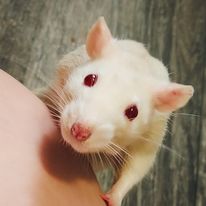
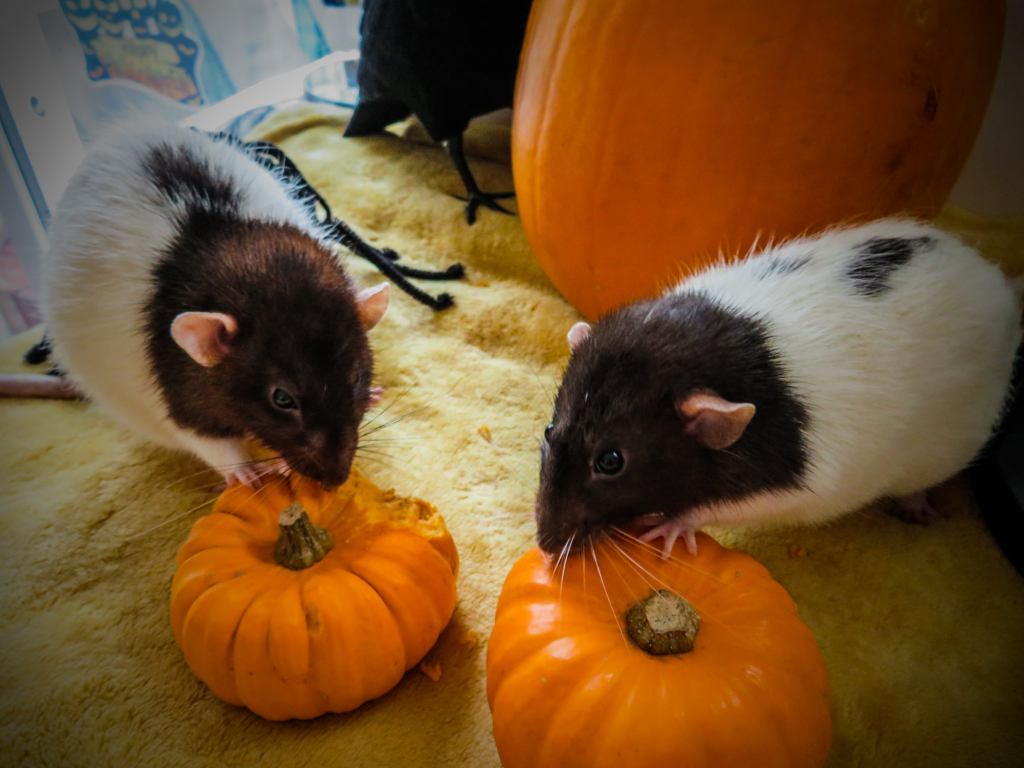
I first got rats as pets when I was 17, I was a psychology student and learning all about medical research studies involving rats as participants, sometimes experiments that killed them or put them through stress and suffering.  All to better understand our own brains and the medical treatments that would be beneficial for us.  I just fell in love with the species, their intelligence and social nature.  So, I got a pair of rats and 11 years later I still have rats, I’ve not been without them since.  Rats were a pet that I had before I developed M.E and I was worried I’d have to give them up when I got ill.  I have my family to thank for initially allowing me to continue to keep them, they helped with the cleaning out and feeding when I wasn’t well enough.  They still help me when I need it.  Having a bed full of rats would probably freak any normal person out but it was a regular joy for me, letting the rats out to free roam around the bedroom cheered me up and it was a way for me to exercise my pets and enjoy them from bed.  I compare having rats to having tiny dogs, they are extremely sociable and friendly, they are intelligent and each one has their own personality.  They are amazing pets, and I couldn’t imagine my life without rats.  They require a lot of stimulation in their cages and regular cleaning out which was sometimes a struggle for me but over the years I’ve found ways to adapt those things and make them easier for me.  I have a raised cage so I don’t have to bend as much, pull out base trays, a cage with big double doors so it’s completely accessible when adding hammocks and ropes.  In a way, chronic illness has made me think outside the box more, I’ve had to find new ways to do things and inventive ways to make things less strenuous or fatigue inducing. 

Luna was more of a spontaneous adoption; a kitten needing a new home.  I’d had M.E for a couple of years and I wanted a nap buddy, so I arranged to go get her and she’s been my best friend for 5 years now.  It wasn’t an easy experience; she came with a lot of issues I hadn’t anticipated.  She had a negative start to life, she was abused and abandoned, underweight and under socialised.  I’d stupidly hoped for a cuddly and affectionate cat immediately and she was the opposite; very frightened and distrustful of people.  She didn’t like being touched or picked up and was very aggressive to anyone coming into the house who wasn’t me.  It was hard because I relied on my family for support and care when I wasn’t well, and they couldn’t really help me because Luna would just attack them when they came in my space.  I thought about rehoming her but I’m stubborn and she’d already had such a horrible experience with people, I didn’t want to give up on her.  It took about a year to gain her trust, and a few years for her to accept my family being around.  She still won’t interact with strangers and she’s aggressive to anyone ‘new’ coming into my life but, with me she’s the most affectionate and cuddly cat.  She doesn’t leave my side, she’s a shadow that follows me around the house.  That companionship has been so important for me, M.E is so isolating and being housebound is the loneliest experience.  Luna has adapted so well to my illness, she’s so relaxed and cuddly when I’m having a bad day, she’s content to just lie with me in bed and provide company.  I can’t express how important that has been for me, that friendship and constant companionship during my time with M.E.

Lastly is my latest addition; Gizmo.  I’ve dreamed of having my own puppy for years, but my health has fluctuated so much that I’ve never felt confident enough to take on that responsibility.  Dogs need a lot more exercise and attention, and I never felt capable enough.  Then last year I decided that I wanted that experience, I don’t think I’ll ever have children and a dog felt like the next best thing.  Living with my parents, I knew I’d have that extra support if I needed it and I wanted a companion for when I’m able to take short walks and get outside.  So, I put my name down on a rescue puppy list and got a call to say there was a 16-week-old puppy, who’d been smuggled from Russia in a lorry, treated terribly and needing a patient, loving home.  I couldn’t refuse, I’m a rescuer, I can’t turn down an opportunity to ‘fix’ or ‘make something better’.  A year later and I can’t remember life without Gizmo.  I won’t lie, it was hard.  My health initially got worse with the extra activity and attention I was putting into a puppy.  I underestimated the effects of training and entertaining a dog, it took a lot of my energy.  But the thing I love about animals the most is that they adapt, and Gizmo has adapted so quickly to my routine.  He’s learned that I need to sleep in the day, and he’s made that his own nap time too, when I’m low energy he brings his toys on the bed to play with, he has just attuned himself to my fluctuating M.E and I think that’s amazing for a puppy to do.

The main thing my pets provide is unconditional love.  As someone with a chronic illness and an ‘invisible illness’, it’s common to receive a lot of judgement and unkind words.  People can be cruel and unthinking; animals aren’t like this.  I feel like my pets accept my illness, they accept how my life is and where my limits are and don’t love me any less for it.  Pets certainly make my life with chronic and mental illness more bearable. 

M.E Awareness 2022: 10 things I wish people understood about M.E.

M.E Awareness 2022: 10 things I wish people understood about M.E.

1. Despite the other common name for the condition (Chronic Fatigue Syndrome), fatigue is not the only symptom of this illness. M.E/CFS is a multisystem disease and affects various areas and systems in the body.  There are a number of symptoms that affect someone with M.E; widespread pain, stomach issues and food intolerances, sleep disturbance, post-exertional malaise, autonomic dysfunction, cognitive issues, sensitivity to light and sound, orthostatic intolerance, tachycardia, flu-like symptoms, swollen glands etc.  That’s just some of the symptoms!  M.E is so often thought of as ‘just a fatigue disorder’ and that’s wrong, it influences multiple areas of the body. Also, worth mentioning here is that fatigue isn’t just tiredness.  Fatigue in a person with M.E isn’t just ‘being tired’; it’s full body exhaustion, not being able to physically function because your body can’t produce the energy.  Not being able to eat, move around, wash, and sometimes even not being able to get up to go to the toilet.  It’s an exhaustion that leaves severe M.E sufferers completely bedbound.  It’s not just tiredness, it’s overwhelming exhaustion that makes functioning impossible, it’s debilitating and very life-limiting, it shouldn’t be trivialised or underplayed.

2. M.E is a fluctuating condition.  That means symptoms can change on a day-to-day basis and the severity level of symptoms can also differ from day-to-day or week-to-week.  For example, one day I might be able to walk my dog for half an hour or go out and do some shopping, but the next day I might be so overrun with pain and exhaustion that I can’t get out of bed or manage my own personal care.  It doesn’t just differ day to day either; M.E can leave me housebound for a whole month and then I might have a good week where I have the energy to get out a few times and exercise or socialise.  There are varying levels of M.E and sufferers can go from mildly affected to severely affected or the other way around.  Some M.E sufferers experience years of hardly any symptoms but then relapse and are severely affected again.  It’s not a predictable disease.  There is also the issue of post-exertional malaise which refers to the consequences of using energy.  M.E sufferers experience a kind of payback for activity, it’s hard to understand if you’ve not experienced it.  It’s a flu like feeling after activity.  So, I might have the energy to go out, socialise and go shopping but within 24 hours I will experience a crash for expending that energy and it could leave me bedbound for days.  It’s why M.E sufferers must be very considerate about what they use their energy on, because doing so might cause a huge flare up of symptoms that lasts 48 hours or more, which leaves us unable to function normally.

3. There is no cure or definitive treatment for M.E.  I can’t just take a ‘magic pill’ and make M.E disappear.  There have been various treatments recommended for people with M.E and some of these have been more harmful that helpful.  The important thing to note is that M.E is an under-researched disease with no definitive cause or explanation for why it develops, so it’s about managing symptoms rather than treating the root of the problem.  So, management of some of my symptoms are done by medication, pain killers, antidepressants, stomach tablets etc.  I’ve undergone a few courses of CBT (Cognitive Behavioural Therapy), been to physiotherapy, had lidocaine infusions, done acupuncture sessions etc.  But all of this doesn’t fix M.E, it doesn’t make it any less debilitating; it’s a crutch not a cure.

4. There is no time limit with M.E.  There’s no window of recovery or limit to the illness.  M.E can affect some people for 6 months; it can affect some people for 6 years and it can affect some people their whole life.  I’ve been on the receiving end of questions like: “well, how long are you going to be like this?” and “shouldn’t you have recovered by now?”.  There is no ‘time’ I should feel ‘better’ by, M.E isn’t governed by a time limit, it affects everyone differently and for various lengths of time.  It’s important not to make someone with M.E feel like they haven’t ‘recovered’ quickly enough or put some made up time limit on their condition.  M.E has no expiration or ‘best before’ date, it’s not a condition that will miraculously disappear after a few months.  The body takes as long as it needs, M.E doesn’t just expire.

5. M.E makes planning and socialising very difficult.  M.E doesn’t notify me when it plans to have a good day or bad day; I can’t predict how I’m going to feel tomorrow, let alone next week.  As a result, I have to cancel a lot of my plans last minute and I hate it.  But it’s not out of laziness or rudeness.  I’m not cancelling because I’m being rude or can’t be bothered.  It’s worse with social plans, I hate cancelling on friends and family.  I hate to think that they believe I’m just being antisocial or blowing them off.  The reality is; I’ve woken up that day and the energy just isn’t there, the fatigue is too severe for me to wash, get dressed or even get out of bed.  I might not always make that clear because it’s embarrassing to admit and I’m ashamed to reveal that weakness.  Like I said in my first point, M.E affects multiple areas of the body; but it also affects multiple aspects of life and socialising is one of these.  It can have a huge impact on mental health, not being able to see friends or family, not being able to attend events or stick to dates is devastating.  I wish more people understood that cancelling isn’t me being rude or neglectful, it’s out of necessity because I have an unpredictable disease.  Just know that someone with M.E might cancel on you, but it doesn’t mean they don’t want to see you or aren’t interested. Support and friendship are extremely important to someone with M.E because it’s a very isolating illness.

6. While advice and suggestions on my M.E are appreciated when they come from a place of care and concern; judgements and criticisms of how I manage my illness are not appreciated.  I’m sure the majority of M.E sufferers have heard the typical: “you just need to get out more”, “you just need to do more exercise” and “you just need to try harder”.  I can’t begin to express how upsetting those types of comments are.  If you haven’t suffered with M.E or had any experience with the condition, then it’s hard to understand how it affects someone with M.E, so be considerate when making comments and giving advice.  There’s a difference between constructive suggestions and unhelpful criticism or judgements on how that person with M.E manages their illness. For example, telling me “You just need to get out and exercise more, get some fresh air” isn’t helpful to me because I’m not choosing not to do those things, my illness makes it extremely difficult.  All that comment does is make me feel lazy and ashamed and more frustrated with my illness.  Getting outside and being active is so beneficial for mental health when it comes to living with M.E but it’s not going to make me ‘better’ and suggesting it’s that easy just trivialises my suffering.  Instead try encouraging and supporting someone with M.E to do these things.  My Mum is a pro at this, when she realises I’ve been stuck inside a lot, she suggests we go somewhere for a short walk and makes it easier for me by bringing fluids, a camping chair and; just makes it a positive thing rather than just criticising me for not trying hard enough to get out.  Advising someone with M.E is about support and understanding, not just pointing things out and telling them to change how they cope.

7. Sleep doesn’t make any difference to someone with M.E.  A ‘good nights sleep’ is not going to miraculously cure my fatigue; because like I’ve said, fatigue isn’t just tiredness.  A very prominent symptom of M.E is unrefreshing sleep.  When the average person sleeps, their brain and body go through a sort of, restoration process.  The body recovers from the days activities when you go to sleep at night.  But with M.E this doesn’t happen.  I wake up just as exhausted as when I went to bed the night before.  People with M.E suffer with nonrestorative sleep which basically means, the body doesn’t recover normally during sleep, it doesn’t restore energy properly.  So, I can wake up with absolutely no energy even though I’ve not done anything yet, I don’t wake up feeling refreshed and ready for a new day.  It’s an ironic aspect of M.E that I sleep so much yet don’t feel any relief from sleeping.  Someone with M.E might have to sleep during the day for example, but that sleep won’t fix most of their symptoms.  For me, my mental and cognitive abilities begin to decline very quickly in the afternoon, I start to lag and struggle to stay awake or function so I will have a nap, and although it helps short term, physically it doesn’t change my symptoms. It doesn’t matter if I sleep too much or not enough, I still feel the same exhaustion. 

8. M.E can affect anyone, there is no criteria for this disease.  M.E can develop in a completely fit and healthy person, it doesn’t just affect people who may have other health issues. Some people can identify a trigger; for me it was glandular fever but in some people it just develops over a period of time with no clear cause. There is a misconception that M.E only develops in people who already have certain health problems but that’s not the case. M.E doesn’t just affect a certain type of person, it could develop in someone with previous illnesses or it could develop in someone who’s never been seriously ill and is in peak health.

9.  M.E is not a psychiatric disease!  M.E is too often put down to psychiatric issues and labelled as a mental illness.  This is false.  M.E is classified by the World Health Organisation as a neurological disease. This is because of the number of neurological symptoms an M.E sufferer experiences; autonomic nervous system dysfunction, cognitive dysfunction, hypothalamic dysfunction, sensory disturbance etc.  The misconception that M.E is a mental illness, or a psychiatric issue comes from very outdated opinions and ignorance.  This hasn’t been helped by the fact that cognitive behavioural therapy was flagged as a treatment option for M.E for so long.  While someone with M.E might also suffer with mental health problems, these are two different health conditions.  So many people who suffer with M.E still experience doubt that M.E is real because they are told: ‘it’s all in the mind’.  It’s a horrible misconception and can be really distressing for someone living with M.E; to be told their physical symptoms aren’t real.  For so long, people with a diagnosis of M.E were referred to psychiatrists and I still see it happen now, it’s just ignorance.  M.E is a physical, neurological disease and it’s not something that can be cured with psychological therapy or antidepressants.

10.  There’s no diagnostic test for M.E.  A lack of research in M.E in the past has meant, there isn’t a definitive marker associated with diagnosing M.E.  When I was going through the diagnosis process, a lot of people said: “can’t you just have a blood test to confirm it?” and it was frustrating.  It almost makes it seem like there’s no proof and people then wrongly label the M.E symptoms as psychological.  Diagnosing M.E is done by ruling out other conditions with the same symptoms, it’s a process of elimination.  As a result, it can take a long time to be diagnosed and this can lead to the misconception that it’s not a real, physical illness.  The truth is, there’s just not enough research to produce a definitive test for M.E, I hope that this is something that will change soon, as more research is undertaken.  But just because there is no particular blood test or scan that can identify M.E, doesn’t mean it isn’t a real, debilitating illness. 

Hard to Bleed

Hard to Bleed

Something plenty of chronic illness warriors are familiar with is the blood test. I’ve recently been having a number of blood tests at the hospital, investigating my innappropriate sinus tachycardia. It’s been a nightmare and I wanted to share my experience because I’ve found myself so frustrated with my own body and with elements of the healthcare system itself.

I’ve had a lot of experience with blood tests; although M.E isnt a condition that can be diagnosed with a blood test, it involves blood tests to rule out any other illness with similar symptoms. Unfortunately blood tests are a literal nightmare for me because I have deep set veins. The majority of people can see their veins, the blue lines running down the arms, in the hands and feet but mine don’t show up; my skin is literally just like a blank piece of paper. My veins also can’t be easily identified by feeling for them; this means that when I need a blood test, it’s incredibly hard to do. I’ve had 3 blood tests at the hospital in the last couple of months and everytime I’ve walked out with upwards of 10 needle holes, but no actual blood being taken.

One of the things that this experience has highlighted for me, is the cracks in the NHS system and the frustration felt by the nurses working on the front line; as well as my own frustrations as a patient. My recent blood test appointments with the hospital have been scheduled as 15 minute appointments; each one has lasted more than an hour, with the longest being almost 2 hours. It’s been frustrating for myself and for the nurses. The major problem has been that the blood department in the hospital does not have access to an ultrasound machine. This is needed for people with deep set veins because it’s one of the only ways to identify a vein and guide a needle to it. Without it, it’s like a game of ‘pin the tail on the donkey’ but with a lot more pain. With the ultrasound machine, there’s no guessing or estimating, the nurse can literally see inside my arm and know exactly where to find my veins. But, like I said, the blood room at my hospital doesn’t have this piece of equipment. I’m not the only person in the world to have deep set veins, i’m actually one of three people in my family who have this issue. There are so many more in the world and it seems like common sense to me, to have an ultrasound available in a blood room for these patients. During my last blood test, the nurses were discussing the fact that they’d requested an ultrasound machine for their department and it had been denied. I heard them voice their frustrations at not having that equipment despite having plenty of ‘hard to bleed’ patients and being turned down and ignored by their higher ups. It was insinuated that this is because the cost of the machine would outweigh the benefits. To me, this is nonsensical. My 15 minute appointment lasts over an hour, takes three nurses and sometimes a doctor, a whole tray of needles, swabs and other blood related equipment. Meanwhile a whole que of people needing blood tests and needing to see a nurse are piling up outside, clinics are starting which require the nurses busy with me and I’m sitting in this madness; thinking how an ultrasound machine would prevent all of this.

I experienced a development to this madness last week when; after 40 minutes of attempting to get a vein, I was asked to sit with my hands under hot running water. The nurses hoped this would bring up the veins in my hands. Warm skin is key in blood tests, it makes veins easier to find and see. I tried the sink located in the actual treatment room, and three sinks in the department bathroom; none of which had any hot water. This is a hospital; a place where hygiene is of the utmost importance, especially in recent years. I get that most hospitals are old buildings and pipes can be tempremental but this shouldn’t be an obstacle in this day and age. I couldn’t get hot water from any of the taps in that department, each one was ice cold. I don’t know if I’m crazy or over thinking, but to me hot water is a basic requirement in any hospital. There shouldn’t be a whole department of people trying taps and being unsuccessful in getting any hot water. I’m not even talking about a small hospital, this is a huge city hospital. The worst part for me, was seeing the frustration the nurses felt. They are being told to get blood from a patient but they don’t have the equipment they need to do so. Nurses working for the NHS now are suffering, departments are understaffed and there’s a huge backlog of patients. As I sit there, for hours being repeatedly stabbed for blood; the nurses are falling behind and having to apologise to their bosses; patients that are waiting are getting frsutrated and taking it out on them. I can’t help feeling like I’m wasting their time and that I’m a burden; and as a patient it’s a horrible feeling to have. I am seriously considering not going for my further blood tests because each time it’s so much pressure on the nurses and it’s them that get reprimanded for taking too long or falling behind. I hate causing a fuss, I hate being the centre of attention, I hate being a burden. But each time I go for a blood test it’s the same; I take up multiple nurses, multiple resources, hours of time needed for other patients. But I also can’t help feeling that this could be prevented if the bosses just supplied the department with a basic piece of machinery, the ultrasound.

It hits so much harder at the minute as taxes and National Insurance rise, the government state that this increase is to better support our NHS and help get over the covid backlog of patients; but I think there was serious underfunding way before covid hit. Departments not having access to machinery or even hot water is unacceptable and it’s those nurses and doctors on the front line that have to deal with this. It’s the NHS staff on the front line, working face to face with patients who take the brunt of the pressure and consequences. It makes it sound like a joke when the government justify rises in taxes etc on providing better financial support to the NHS, but there’s departments going without hot water and being denied necessary equipment because the cost outweighs the benefit. Why isn’t this money going on the basic requirements that enable nurses and doctors to do their job? why do they have to struggle for resources? It doesn’t give me any confidence in the government’s promises, their priorities are so skewed it’s laughable. I suspect the money they spent supplying alcohol in their lockdown parties could have paid for an ultrasound machine and that’s what cuts the hardest.

My recent experience isn’t a one off, I’m sure there are countless other patients feeling let down and abandoned right now. But I think it’s important to remember that this failure isn’t caused by the people working in the NHS. I’m always surprised when I go for my blood test at how selfless and supportive the nurses are with me. They know when they see me in that blood room that it’s going to take a prolonged amount of time and effort to deal with me but it never shows in their attitude, they continue to be kind and compassionate towards me. I think it’s important to remember that these front line workers are doing their best but their work is made ten times harder when essential equipment and resources are withheld from them. It shouldn’t be this way, and it’s a huge failure by officials to let it continue this way.