Pets and Chronic/Mental Illness.

Pets and Chronic/Mental Illness.

You know the people that are more comfortable with animals than people; the type of person who sees a cat in the street and has to greet it, the person stood talking to farm animals or cooing at birds in the garden?  That’s me.  I’m an animal person.  As a person with awful social anxiety, I’ve often turned to animals for companionship and socialisation.  I’ve never not had pets.  Growing up, I had so many different pets and it made me love all different types of animals.  As a shy child and teen, my pets were my friends.  Now I’m 28 and suffer with chronic health conditions, pets are still my joy and my companions through tough times.

When I first started suffering from chronic health issues, I worried that pets wouldn’t be an option for me anymore.  My fatigue was overwhelming, and I couldn’t see how I would cope looking after animals when I was struggling to look after myself.  But at the same time, I needed my animals because I was struggling to accept my illness, mentally I was low and the physical pain and fatigue occupied all my thoughts.  My pets gave me something else to think about, something to stay motivated for and something to lift my spirits.  My pets were the only thing I could really feel joy for, the one thing that made me happy when I was struggling to live life like a normal young adult.  I’d see friends and people my age out socialising, spending all night drinking and partying and it was hard to not be a part of that, to be limited by my health, my own body.  I felt like I was a broken person, fighting my own body and fighting health professionals who were judgemental and ignorant of M.E.  At that point in my life, I needed my animals to keep me going more than ever and they were, and still are a huge factor in my happiness and mental health.

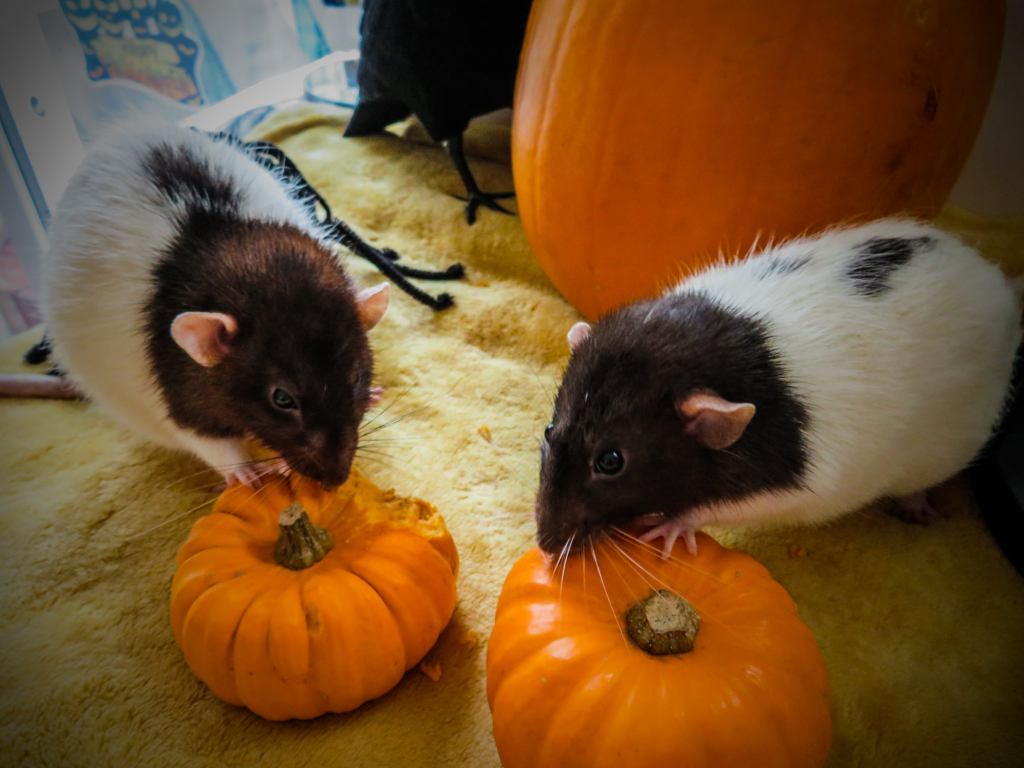
I first got rats as pets when I was 17, I was a psychology student and learning all about medical research studies involving rats as participants, sometimes experiments that killed them or put them through stress and suffering.  All to better understand our own brains and the medical treatments that would be beneficial for us.  I just fell in love with the species, their intelligence and social nature.  So, I got a pair of rats and 11 years later I still have rats, I’ve not been without them since.  Rats were a pet that I had before I developed M.E and I was worried I’d have to give them up when I got ill.  I have my family to thank for initially allowing me to continue to keep them, they helped with the cleaning out and feeding when I wasn’t well enough.  They still help me when I need it.  Having a bed full of rats would probably freak any normal person out but it was a regular joy for me, letting the rats out to free roam around the bedroom cheered me up and it was a way for me to exercise my pets and enjoy them from bed.  I compare having rats to having tiny dogs, they are extremely sociable and friendly, they are intelligent and each one has their own personality.  They are amazing pets, and I couldn’t imagine my life without rats.  They require a lot of stimulation in their cages and regular cleaning out which was sometimes a struggle for me but over the years I’ve found ways to adapt those things and make them easier for me.  I have a raised cage so I don’t have to bend as much, pull out base trays, a cage with big double doors so it’s completely accessible when adding hammocks and ropes.  In a way, chronic illness has made me think outside the box more, I’ve had to find new ways to do things and inventive ways to make things less strenuous or fatigue inducing. 
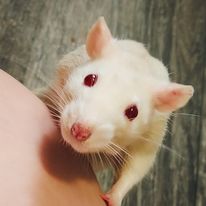
Luna was more of a spontaneous adoption; a kitten needing a new home.  I’d had M.E for a couple of years and I wanted a nap buddy, so I arranged to go get her and she’s been my best friend for 5 years now.  It wasn’t an easy experience; she came with a lot of issues I hadn’t anticipated.  She had a negative start to life, she was abused and abandoned, underweight and under socialised.  I’d stupidly hoped for a cuddly and affectionate cat immediately and she was the opposite; very frightened and distrustful of people.  She didn’t like being touched or picked up and was very aggressive to anyone coming into the house who wasn’t me.  It was hard because I relied on my family for support and care when I wasn’t well, and they couldn’t really help me because Luna would just attack them when they came in my space.  I thought about rehoming her but I’m stubborn and she’d already had such a horrible experience with people, I didn’t want to give up on her.  It took about a year to gain her trust, and a few years for her to accept my family being around.  She still won’t interact with strangers and she’s aggressive to anyone ‘new’ coming into my life but, with me she’s the most affectionate and cuddly cat.  She doesn’t leave my side, she’s a shadow that follows me around the house.  That companionship has been so important for me, M.E is so isolating and being housebound is the loneliest experience.  Luna has adapted so well to my illness, she’s so relaxed and cuddly when I’m having a bad day, she’s content to just lie with me in bed and provide company.  I can’t express how important that has been for me, that friendship and constant companionship during my time with M.E.

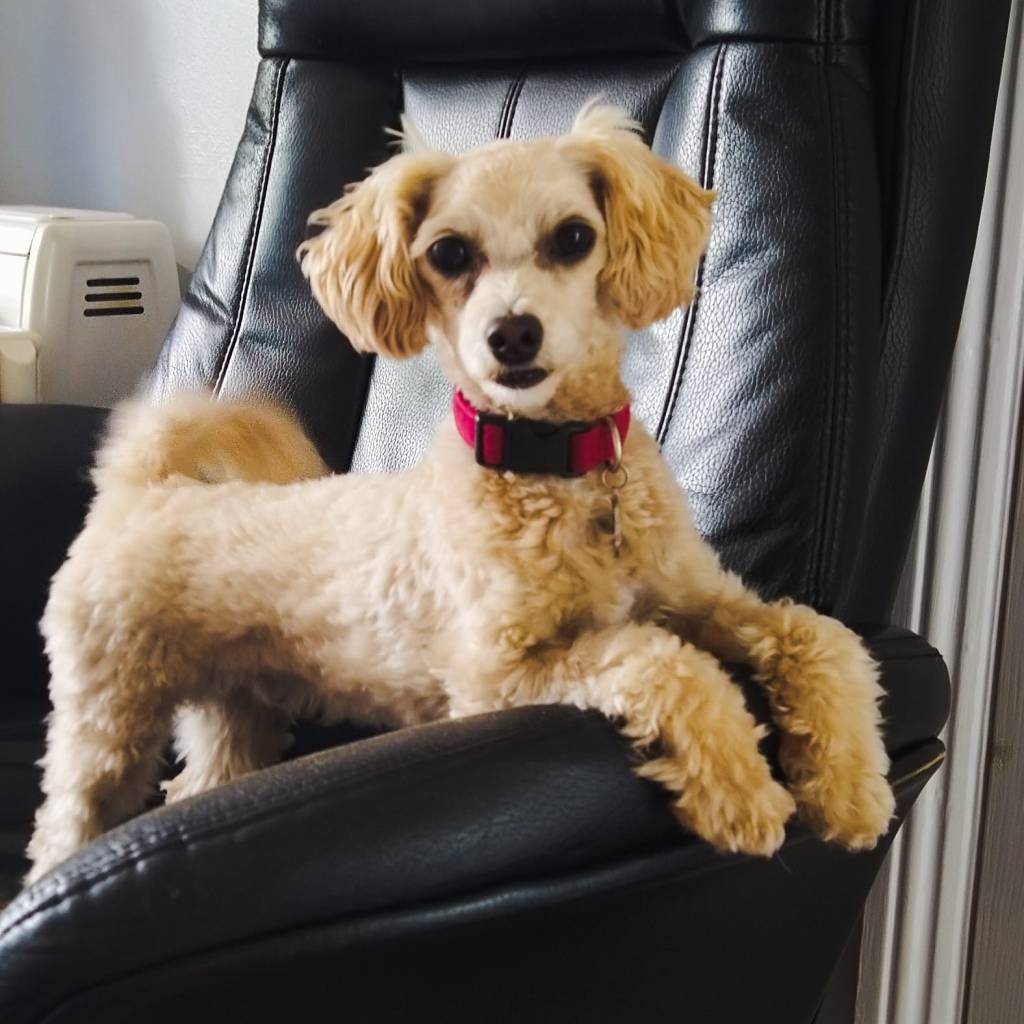
Lastly is my latest addition; Gizmo.  I’ve dreamed of having my own puppy for years, but my health has fluctuated so much that I’ve never felt confident enough to take on that responsibility.  Dogs need a lot more exercise and attention, and I never felt capable enough.  Then last year I decided that I wanted that experience, I don’t think I’ll ever have children and a dog felt like the next best thing.  Living with my parents, I knew I’d have that extra support if I needed it and I wanted a companion for when I’m able to take short walks and get outside.  So, I put my name down on a rescue puppy list and got a call to say there was a 16-week-old puppy, who’d been smuggled from Russia in a lorry, treated terribly and needing a patient, loving home.  I couldn’t refuse, I’m a rescuer, I can’t turn down an opportunity to ‘fix’ or ‘make something better’.  A year later and I can’t remember life without Gizmo.  I won’t lie, it was hard.  My health initially got worse with the extra activity and attention I was putting into a puppy.  I underestimated the effects of training and entertaining a dog, it took a lot of my energy.  But the thing I love about animals the most is that they adapt, and Gizmo has adapted so quickly to my routine.  He’s learned that I need to sleep in the day, and he’s made that his own nap time too, when I’m low energy he brings his toys on the bed to play with, he has just attuned himself to my fluctuating M.E and I think that’s amazing for a puppy to do.
The main thing my pets provide is unconditional love.  As someone with a chronic illness and an ‘invisible illness’, it’s common to receive a lot of judgement and unkind words.  People can be cruel and unthinking; animals aren’t like this.  I feel like my pets accept my illness, they accept how my life is and where my limits are and don’t love me any less for it.  Pets certainly make my life with chronic and mental illness more bearable. 

My Puppy and M.E

My Puppy and M.E

All my life I have lived with pets. I grew up with dogs, hamsters, birds, a bunny and ferrets. When I was in my teens I got into keeping rats and this has been a passion of mine ever since. Then I adopted a cat and completed my pet family. My pets are a huge part of my life and they’ve made coping with M.E easier. They provide constant companionship and this is appreciated when I’m housebound for long periods of time. My mental health and motivation is made stronger with them in my life.

This summer I decided I wanted to add a puppy to my life. It was something I had to think on; my M.E fluctuates and there are days I can barely get out of bed. But I’m in a stronger place now than a few years ago, I know better how to pace myself and when to stop pushing myself. I’ve learned to listen to my body more and rest when needed. I decided a puppy would be a new challenge…and it has been in ways I never even thought about!

A few months ago I was approached by a rescue centre who had a 15 week old Maltese puppy. A toy breed was not something I originally wanted, but when I heard this puppy’s story I was committed. This 15 week old pup had been bred in a puppy farm abroad, separated from his mother at 4 weeks; concealed in a lorry with his siblings and smuggled all the way from Romania to the UK border where authorities discovered him. Some of his siblings had died on the journey but he and 2 other puppies had survived. I’m a huge animal advocate and there is no way I could not give this little puppy a better life. So I adopted him after his quarantine, named him Gizmo and it has been a rewarding but challenging experience so far!

I knew a puppy would mean getting up early to let him out but I never thought it would be such a difficult job for someone with M.E. I take regular medication at night before bed to manage pain as it often stops me sleeping. My pain has always been worse at night and restless legs have been a huge problem for me. Taking medication before bed allows me to sleep easier and with less pain and discomfort. But, it makes early mornings extremely difficult. The medication makes me very groggy when waking up, my whole body feels like its been weighed down and it’s a struggle to get up out of bed quickly. Normally this isn’t so much of a problem because I will just lie in bed until the feeling passes and then I can slowly get out of bed. With M.E it’s important to do things gradually and getting up in the morning is no different. I have to do it in steps, get up and wash, take a break, get dressed, take a break, brush hair and teeth, take a break etc. A puppy with a small bladder has no time for this. Suddenly waking with an alarm, getting up and immediately going outside was a shock to the system. The fact it’s winter makes it ten times worse because one of the worst symptoms of my M.E is not being able to regulate body temperature so I’d go out into the freezing cold but it wouldn’t hit me until later and then my bones would be stiff and sore and I’d be cold despite being inside again. The sudden getting out of bed without waking fully made my fatigue a lot worse. My fatigue is made worse by an alarm going off because I’m not waking naturally; my body isn’t ready to wake up, I’m pushing it to get up and with M.E this has consequences. I managed for a couple of weeks but it quickly became apparent that it was having a negative affect on my energy and fatigue levels. It was really frustrating because I felt like I’d failed at the first hurdle. Luckily my parents are really understanding of my M.E; they are my carers and they always come up with compromises that allow me to handle my symptoms but keep a bit of independence and responsibility. So instead, they began letting Gizmo out in the morning, then he’d come back and sleep with me until I woke naturally. It made things a lot easier, because I was rested when I woke up instead of waking up before I was fully rested.

The early morning was the most challenging part of having Gizmo, I didnt realise how important it was for me to sleep until I was rested enough to wake up naturally. Sleep is of such a low quality for M.E sufferers that we need more than the average person. Getting up with an alarm and getting straight out of bed is difficult with M.E, it isn’t just a case of being lazy or lacking motivation. I was hugely motivated to get up and let Gizmo out, I experienced so much frustration and disappointment when I realised I couldn’t manage that. But M.E doesn’t care about how much motivation you have to do something, if the body physically cant cope then you have to accept it; that’s why it’s such a devastating illness. I’ve experienced another issue I never expected when adopting Gizmo. Because he’s such a small breed of dog, Gizmo frequently needs picking up. It took time for him to master going up and down stairs, he can’t get on my bed or the sofa without being picked up, there are times he can’t get over something and like any small animal, he needs help. After a couple of weeks with Gizmo, I started experiencing awful back pain, a constant ache and spasms in my lower back that left me gritting my teeth in pain. Back pain was one of my worst symptoms when I first developed M.E, it took years to learn to manage that pain. It’s a symptom that improved when I started to pace myself, and avoid jobs that involved repeatedly bending; hoovering, lifting heavy things etc. It was something I never considered when adopting a puppy. It took me a while to realise my worsening back pain was due to the repeated motion of bending to pick Gizmo up. He’s a tiny dog, which means he needs picking up a lot! I’ve managed to find ways around this which has gotten my back pain back to normal levels. I make sure when I pick him up, I don’t bend but squat so I’m using my knees rather than my back. I’ve made steps, so he can get on and off the bed and sofa without needing me to lift him.

Since adopting Gizmo, my fatigue levels have been affected. I’m having to get up and move about more, I’m having to remember to feed him three times a day and put time into training him. But over the weeks it’s gotten easier. Animals are amazing, they are so much smarter than we give them credit for. I’m shocked at how Gizmo has adapted to my illness. When it’s time for bed, he goes into his bed and sleeps through the night until my parents get him up and let him out. He then comes back to bed and sleeps until I’m ready to wake up, it’s like he knows I need that extra time to sleep. I often need to sleep for a few hours during the day because of my fatigue and he’s adapted to his, he comes to bed with me and sleeps at the same time. He’s learned that when I’m awake, it’s playtime and it’s time to be active and hyper but when we go to my bedroom, it’s rest time. If I’m having a particularly bad day where I need to stay in bed then he knows that he has to spend more of the day with my parents. Over the weeks, we’ve established a routine and slowly my fatigue levels are becoming more stable. It’s been harder than I expected, but I wouldn’t change it. It’s tested me and in a way, made me more aware of my limits and what factors can trigger my symptoms to flare up. It’s been a hugely rewarding experience despite the obstacles though, I’ve got a new little friend. Gizmo had a rough start to life and I can’t wait to give him a life filled with love and attention. I’ve already watched his confidence and his personality grow, and I know he’s going to make a great little companion. He’s already boosted my mental health enormously, and it makes living with chronic illness that little less lonely.