A Disaster of an Appointment

A Disaster of an Appointment

I think everyone who suffers with M.E or other chronic illnesses, experiences the frustration of not being ‘normal’ or wishing their illness would just give them a day off.  I experienced that feeling this week at a hospital appointment and I’ve never felt so defeated and fed up with my body. 

For the last year I’ve been undergoing medical tests for a heart problem, my heart seems to want to beat as fast as it can all the time, even when I’m resting.  It’s caused symptoms like; palpitations, chest pain, syncope, postural hypertension, sweating, dizziness and left me even more debilitated than usual.  Luckily, I started a heart medication this year which completely rid me of all symptoms and reduced my heart rate to normal.  However excessive activity still flares the symptoms up and the chest pain occurs periodically so I’m still having tests to rule out various conditions. 

This week I was sent for a cardiac exercise test which brought dread to my mind immediately.  Anyone with M.E will understand that dread because with M.E; exercise comes with consequences (post-exertional malaise).  There’s also that uncertainty that comes with M.E or any fluctuating condition; ‘will I be well enough to do it on the day?’.   I’ve never realised how quickly M.E can shift and completely wipe out the body until this test, and it wasn’t even the test itself that did it.  I arrived 45 minutes early to my appointment, it’s a large and busy hospital so I must factor in the time it will take for parking and for the distance and time It will take me to walk to the right department.  It’s normally fine, my Mum parks and we find the department with time to spare.  This week however, it was like the whole world had descended on that hospital and it was pure chaos.  The disabled parking lot was full and with a queue of cars waiting.  The main car park was so full that cars had taken to parking on grass verges and in completely obscure places.  The overspill carpark and drop off points were also all overrun.  The queue to park anywhere near that hospital was a mile long and every car was like a shark looking for its prey, every car for itself.  There were arguments over who was first for a space, people would drive like lunatics to beat someone else to an open spot.  I’ve never seen a scene like it, and as an anxiety sufferer, I was horrified by how selfishly and carelessly people will act when there’s not enough of something for everyone.  I was in that queue for 50 minutes, moving at a snail’s pace.  It got to ten minutes before my appointment, and I was still at least half an hour away from finding a parking spot.  When I rang the department to explain the situation and inform them I’d be late, I was told it didn’t matter if I was there 45 minutes early and stuck in a queue for 50 minutes; if I wasn’t there within 15 minutes my appointment would be cancelled.  That would mean an hour’s journey to the hospital and 50 minutes sat in a queue would be completely wasted, for something that was no way my fault, or within my control. 

I’ve always noticed that my anxiety levels can impact on me M.E; panic attacks are physically and mentally exhausting and, energy levels quickly become depleted.  Sitting in that queue for 50 minutes worrying and stressing; then being told my appointment would just be cancelled if I couldn’t park in time…. was completely draining.  At ten minutes past my appointment time, the nurse in charge of my test rang and gave me permission to park at the back of the staff carpark.  It was then a 15-20 minute mad rush to the department; I’ve never moved quicker.  The issue with that mad rush is that I arrived at the department sweating profusely and out of breath…to then begin an exercise test.  I was determined despite my M.E to complete that exercise test but I hadn’t anticipated an hour’s stress and anxiety before and a 15-minute run beforehand.  I got on that treadmill and as soon as it started, I felt like crying because I knew I wouldn’t manage it.  I’ve got short legs and it takes me twice the number of steps to match someone else’s stride; and that treadmill was fast.  I hadn’t expected to begin at jogging speed, and I knew at that moment I wasn’t going to last long.  I’d just run from the furthest carpark, through a busy hospital; after an hour’s stress and anxiety and, I was then expected to exercise for half an hour.  I managed 4 minutes on the treadmill before my blood pressure shot to 210/100 and I started to see black spots overtake my vision, at which point the test was stopped.  I’ve never felt more defeated and embarrassed.  I felt like I’d wasted the nurse’s time, my Mums time because she taken a day off work to take me.  I’ve never felt so upset and frustrated with my body.  It’s a horrible feeling to mentally want something but not physically be able to carry it out.  I felt completely useless, worthless, and deflated.  Despite the nurse trying to reassure me, I felt like such a waste of space in that moment.

That’s one of the worst things about having M.E; it can completely defeat you some days.  I’d started with the determination and energy to do that exercise test, and that energy was depleted before I even got to the treadmill.  I hate disappointing other people and taking up people’s time but there’s also that disappointment in myself and my own ability.  There’s also that fear of being judged as lazy or as somebody who hasn’t tried hard enough. Having to stop that test and admit defeat completely devastated me and my mental health.  That’s another challenging part about M.E, it’s often unpredictable.  M.E is a fluctuating condition, and it can be affected by the smallest triggers.  I might be able to walk for 30 minutes next week but on the day I needed that energy and ability, it wasn’t there.  Life with M.E is a life of uncertainty and that’s one of the hardest aspects of the illness for me.

Pets and Chronic/Mental Illness.

Pets and Chronic/Mental Illness.

You know the people that are more comfortable with animals than people; the type of person who sees a cat in the street and has to greet it, the person stood talking to farm animals or cooing at birds in the garden?  That’s me.  I’m an animal person.  As a person with awful social anxiety, I’ve often turned to animals for companionship and socialisation.  I’ve never not had pets.  Growing up, I had so many different pets and it made me love all different types of animals.  As a shy child and teen, my pets were my friends.  Now I’m 28 and suffer with chronic health conditions, pets are still my joy and my companions through tough times.

When I first started suffering from chronic health issues, I worried that pets wouldn’t be an option for me anymore.  My fatigue was overwhelming, and I couldn’t see how I would cope looking after animals when I was struggling to look after myself.  But at the same time, I needed my animals because I was struggling to accept my illness, mentally I was low and the physical pain and fatigue occupied all my thoughts.  My pets gave me something else to think about, something to stay motivated for and something to lift my spirits.  My pets were the only thing I could really feel joy for, the one thing that made me happy when I was struggling to live life like a normal young adult.  I’d see friends and people my age out socialising, spending all night drinking and partying and it was hard to not be a part of that, to be limited by my health, my own body.  I felt like I was a broken person, fighting my own body and fighting health professionals who were judgemental and ignorant of M.E.  At that point in my life, I needed my animals to keep me going more than ever and they were, and still are a huge factor in my happiness and mental health.

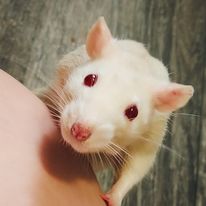
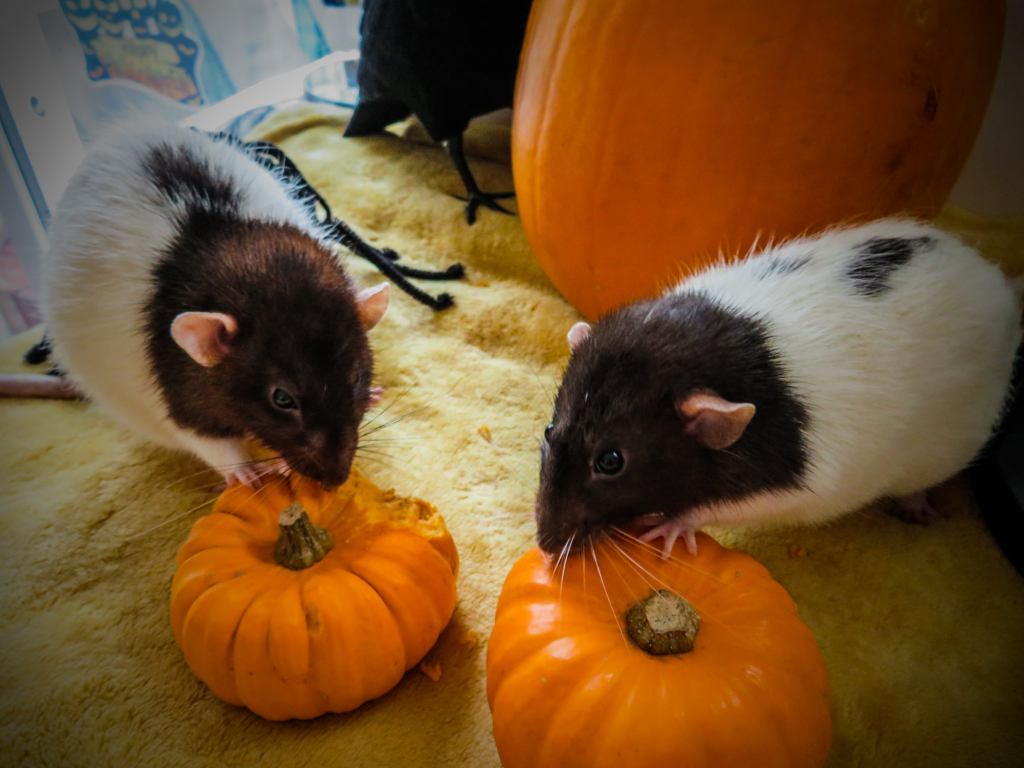
I first got rats as pets when I was 17, I was a psychology student and learning all about medical research studies involving rats as participants, sometimes experiments that killed them or put them through stress and suffering.  All to better understand our own brains and the medical treatments that would be beneficial for us.  I just fell in love with the species, their intelligence and social nature.  So, I got a pair of rats and 11 years later I still have rats, I’ve not been without them since.  Rats were a pet that I had before I developed M.E and I was worried I’d have to give them up when I got ill.  I have my family to thank for initially allowing me to continue to keep them, they helped with the cleaning out and feeding when I wasn’t well enough.  They still help me when I need it.  Having a bed full of rats would probably freak any normal person out but it was a regular joy for me, letting the rats out to free roam around the bedroom cheered me up and it was a way for me to exercise my pets and enjoy them from bed.  I compare having rats to having tiny dogs, they are extremely sociable and friendly, they are intelligent and each one has their own personality.  They are amazing pets, and I couldn’t imagine my life without rats.  They require a lot of stimulation in their cages and regular cleaning out which was sometimes a struggle for me but over the years I’ve found ways to adapt those things and make them easier for me.  I have a raised cage so I don’t have to bend as much, pull out base trays, a cage with big double doors so it’s completely accessible when adding hammocks and ropes.  In a way, chronic illness has made me think outside the box more, I’ve had to find new ways to do things and inventive ways to make things less strenuous or fatigue inducing. 

Luna was more of a spontaneous adoption; a kitten needing a new home.  I’d had M.E for a couple of years and I wanted a nap buddy, so I arranged to go get her and she’s been my best friend for 5 years now.  It wasn’t an easy experience; she came with a lot of issues I hadn’t anticipated.  She had a negative start to life, she was abused and abandoned, underweight and under socialised.  I’d stupidly hoped for a cuddly and affectionate cat immediately and she was the opposite; very frightened and distrustful of people.  She didn’t like being touched or picked up and was very aggressive to anyone coming into the house who wasn’t me.  It was hard because I relied on my family for support and care when I wasn’t well, and they couldn’t really help me because Luna would just attack them when they came in my space.  I thought about rehoming her but I’m stubborn and she’d already had such a horrible experience with people, I didn’t want to give up on her.  It took about a year to gain her trust, and a few years for her to accept my family being around.  She still won’t interact with strangers and she’s aggressive to anyone ‘new’ coming into my life but, with me she’s the most affectionate and cuddly cat.  She doesn’t leave my side, she’s a shadow that follows me around the house.  That companionship has been so important for me, M.E is so isolating and being housebound is the loneliest experience.  Luna has adapted so well to my illness, she’s so relaxed and cuddly when I’m having a bad day, she’s content to just lie with me in bed and provide company.  I can’t express how important that has been for me, that friendship and constant companionship during my time with M.E.

Lastly is my latest addition; Gizmo.  I’ve dreamed of having my own puppy for years, but my health has fluctuated so much that I’ve never felt confident enough to take on that responsibility.  Dogs need a lot more exercise and attention, and I never felt capable enough.  Then last year I decided that I wanted that experience, I don’t think I’ll ever have children and a dog felt like the next best thing.  Living with my parents, I knew I’d have that extra support if I needed it and I wanted a companion for when I’m able to take short walks and get outside.  So, I put my name down on a rescue puppy list and got a call to say there was a 16-week-old puppy, who’d been smuggled from Russia in a lorry, treated terribly and needing a patient, loving home.  I couldn’t refuse, I’m a rescuer, I can’t turn down an opportunity to ‘fix’ or ‘make something better’.  A year later and I can’t remember life without Gizmo.  I won’t lie, it was hard.  My health initially got worse with the extra activity and attention I was putting into a puppy.  I underestimated the effects of training and entertaining a dog, it took a lot of my energy.  But the thing I love about animals the most is that they adapt, and Gizmo has adapted so quickly to my routine.  He’s learned that I need to sleep in the day, and he’s made that his own nap time too, when I’m low energy he brings his toys on the bed to play with, he has just attuned himself to my fluctuating M.E and I think that’s amazing for a puppy to do.

The main thing my pets provide is unconditional love.  As someone with a chronic illness and an ‘invisible illness’, it’s common to receive a lot of judgement and unkind words.  People can be cruel and unthinking; animals aren’t like this.  I feel like my pets accept my illness, they accept how my life is and where my limits are and don’t love me any less for it.  Pets certainly make my life with chronic and mental illness more bearable. 

Favourite First Lines

Favourite First Lines

I’ve read a lot of books with plots so great that they demand you read them in one sitting.  But when a book grabs you from that very first line, it’s a memorable and exciting experience; the promise of great writing to come.  Gripping a reader from the very first line is a marker of a great author, so here are 10 of my favourites from some great novels. *May contain slight spoilers*

  • “It was a dark, blustery afternoon in spring, and the city of London was chasing a small mining town across the dried-out bed of the old North Sea.” – Mortal Engines by Philip Reeve.

This first sentence manages to grab the readers attention immediately by mentioning a well-known city but subtly making it unusual by describing it as ‘chasing’ a small town.  There’s no prior explanation for how or why cities are chasing towns but it’s clear that this world is different to our own because the cities and towns can move.  It makes the reader want to learn more, discover how this world works and what’s contributed to this new and strange Earth.  Mortal Engines is a clever and poignant story which addresses the impact that technology and nuclear weapons could have on the world we live in today; it’s a reminder that worlds can change very quickly as a result of humanity’s actions.  The characters are different, they each stand out for their own reasons and experience, each contribute something different to the overall plot.  It’s a great and cleverly written novel with a warning undertone that reminds the reader, our world is a fragile place, and we shouldn’t abuse it.

  • “Mr Hungerton, her father, really was the most tactless person upon earth – a fluffy, feathery, untidy cockatoo of a man, perfectly good natured, but absolutely centred upon his own silly self.” – The Lost World by Arthur Conan Doyle.

I love this first line so much because it highlights Arthur Conan Doyle’s spectacular ability to bring his characters to life.  The description of a ‘fluffy, feathery, untidy cockatoo of a man’ pains such a vivid a comical image in the reader’s mind.  It illustrates the character of Mr Hungerton so well and urges the reader to carry on and discover more about this character and the other characters to come.  The comical description also highlights the sarcastic and imaginative humour of Arthur Conan Doyle.  The Lost World is a thrilling adventure and discovery novel, and the descriptions of places and people are always so vivid and dramatic that it just engages the reader throughout as they discover this ‘lost world’.

  • “He is fast asleep in his bed on the night that the demon and the once-men come for his family.” – Armageddon’s Children by Terry Brooks (Genesis of Shannara Series).

Terry Brooks’s Shannara series is one of my favourite fantasy series.  The whole series is split into smaller series, so you really discover every aspect of this fantasy world, it’s history and lineage.  This first line is a great one because it immediately thrusts the reader into the action, there’s no descriptions of places or people, it’s just straight into the story.  I love this type of first line because it shocks the reader with immediately putting them in the centre of the action and urges them to read more and discover what’s going to happen, what’s lead to this situation.  It adds a real sense of danger and fear, mentioning ‘demons’ and targeting someone in there most vulnerable state, sleep.  It sets a pace for the novel, one where the adventure never ends, and the characters are constantly in danger or being targeted by other-worldly beings.  Terry Brooks is a great fantasy writer; I never get bored of his plots or characters.  The Shannara series is a fantastic book series and well worth reading if you want to escape into a different world for a bit.

  • “There was once a young man who wished to gain his Heart’s Desire.” – Stardust by Neil Gaiman.

This first line immediately attracted me because it reminded me of the traditional; ‘once up a time’ beginning of fairy tales.  It captures your youth from the get-go and seems like a dramatic beginning, indicating the tale to come will be full of that same drama and intensity.  I also like how it’s a straight-forward first line but it’s also ambiguous in that it doesn’t tell you what the young mans ‘Heart’s Desire’ is, why he wants it or how he’s going to get it.  So, the reader must read on to find answers to these questions.  I just love the simpleness of it, and yet it’s a dramatic start, it feels exaggerated like the beginning of a fairy tale.  Neil Gaiman is a write who I greatly admire because his writing is so simple but so complex, it’s compelling in every way and every thing he writes is enjoyable and different.  Stardust is a magical story, it’s filled with so many imaginative characters and situations, it feels like a very modern and developed fairy tale, to be enjoyed by children and adults.

  • “Marley was dead, to begin with.” – A Christmas Carol by Charles Dickens.

A Christmas Carol is an absolute classic, it’s the very soul of Christmas in a story, loved by so many generations.  It’s clear to see why when you read it, and this first line is a perfect example of how short introductions can really hook a reader.  It’s a short sentence with a lot of information and hints of what’s to come.  It indicates that it’s going to be a ghost story of some sort which isn’t the usual path of a Christmas story, it introduces a character who is already dead which is rarely done in novel writing; and it builds tension.  The way it finishes with; ‘to begin with’ just builds a sense of curiosity in the reader, a tension and excitement to discover what that beginning actually means.  So many people watch the movie at Christmas but so few have read the original book and it’s such a shame because it’s a classic example of brilliant writing.  It’s so well put together and it’s such a heart-warming tale, it reminds you of what’s important at Christmas, not the presents; but the generosity of people and the importance of family.

  • “If you are interested in stories with happy endings, you would be better off reading some other book.” – The Bad Beginning by Lemony Snicket (A Series of Unfortunate Events).

Not many books begin by telling you to go elsewhere and read another book.  It’s like the tactic of telling someone to close their eyes, knowing their going to try and peek.  It’s a reverse psychology technique, by trying to deter the reader, it just makes the reader more motivated to carry on reading.  It’s a great writing technique, I love the irony and cheekiness behind it.  At the same time, it hints at this dark, unhappy story to come and it sounds so mysterious, so tempting, that you must continue reading.  As a child, I loved the Series of Unfortunate Events books because they were so unique.  They had this real dark aspect to them, characters struggling with tragedy and a villain who seems relentless.  It’s an amazing series, it gives children a chance to read a different story, one that is constantly tinged with danger and insecurity.  Despite this, it still keeps a sense of humour; some of the characters are comedic and it cuts through the dark undertone following the story.  Reading it as an adult, I still smile at some of the situations the characters find themselves in, and I still enjoy the dark side of storytelling.

  • “It was a bright cold day in April, and the clocks were striking thirteen.” – 1984 by George Orwell.

This first line is one of those ‘double take’ moments, it sounds relatively normal and then you get to the end and question you’re reading it right.  It’s such a simple way of hinting at an unusual experience to come.  By just adding ‘the clocks were striking thirteen’, it hints at a world different to our own, where the normal rules of time don’t apply any longer.  It’s a great foreshadowing of the story to come, because although it has elements of our reality, it’s not.  The thing I love most about this book is its relevance, despite being written so long ago, it feels as if it could describe the world we live in today.  It feels modern and futuristic, it feels possible and that’s quite a disturbing prospect if you’ve read the story.  It highlights some important issues; about the ways government and technology can interfere with privacy and free will.  It’s a book you have to read and experience because it does encourage the reader to ask questions and it’s a memorable and impactful story.

  • “In a hole in the ground there lived a hobbit.  Not a nasty, dirty, wet hole, filled with the ends of worms and an oozy smell, nor yet a dry, bare, sandy hole with nothing in it to sit down or to eat: it was a hobbit-hole, and that means comfort.” – The Hobbit by J.R.R. Tolkien.

I’ve never read a sentence that exudes so much comfort and cosiness, and all it does is describe a hole.  It also manages to sum up the central characteristics and desires of a hobbit; to be comfortable and have lots of food.  It’s a warm first line that manages to endear the reader and make them invested in the story, in the hobbit race.  It’s a first line that I relate to which is why I love it so much, who doesn’t want to be in a cosy nook with great food, surrounded by comfort and safety.  Despite that start, it’s still a story that follows a quest, an adventure.  It manages to feel cosy and warm while also describing a journey that includes danger and fear.  It follows a character who comes across as very stubborn and set in his ways and takes him out of his comfort zone.  It’s a great character development to read. The whole Hobbit and Lord of The Rings series is fantastic, they are the epitome of fantasy and adventure novels.

  • “One thing was certain, that the white kitten had had nothing to do with it – it was the black kitten’s fault entirely” – Through the Looking Glass by Lewis Carroll.

This is just a first line that takes me back to my childhood, back to when I believed that animals could talk and think like people.  It’s an innocent and mischievous first line that just clutches at the readers heart strings and makes them want to read on and find out what mischief these kittens have been up too, and which is really at fault.  That innocence and mischief is the essence of Alice in Wonderland, it reflects the whole mood and atmosphere these stories create.  It’s a first line that encourages the reader to use their imagination and they won’t stop using it until the story is over because it’s such a fantastical experience.  Alice in Wonderland and Through the Looking Glass are my favourite children’s literature because they embrace nonsense and uniqueness, they don’t conform, and they encourage children to dream and be whoever they want to be.  At the same time, you can read them as an adult and still feel inspired and awed by the world described in the story. 

  • “The man in black fled across the desert, and the gunslinger followed.” – The Gunslinger by Stephen King (The Dark Tower Series).

I’ve saved my favourite to last.  Stephen King is one of my all-time favourite authors, I’ve read all his novels and The Dark Tower series is a sci-fi/fantasy/thriller series, that is so underrated.  This first line is a great one because it raises questions in the reader that can only be answered by reading the book; who is this man in black? Who is this gunslinger? Why is one following the other? Why is the man in black fleeing? Who is the protagonist and who is the antagonist?  It’s one of those first lines that hints at a great story, a great mystery and as the reader, you need to learn more and discover these characters’ secrets.  This first line seems so simple which is a complete contradiction to the story because the plot and characters in this novel are so complex.  The world and the characters portrayed are written in a way that make them seem so genuine and you can’t help engaging with them and becoming invested in their journey.  It’s a series full of twists and mysteries, it’s a fantastic reading experience written by an author who knows how to write a compelling thriller.

Self-care and body image with M.E or Chronic Illness

Self-care and body image with M.E or Chronic Illness

Positive body image is something a lot of people with chronic illness struggle with.  When your body is physically unwell it’s hard to feel positive about it.  With chronic illnesses like M.E, it’s easy to feel negatively about your body because physical and mental symptoms limit your life and make every day a fight.  A lot of medication given for M.E symptoms causes weight gain and an increase in appetite which doesn’t help when you can’t exercise without causing a serious relapse of symptoms and post-exertional malaise.  Then there’s the other side, where fatigue makes you unable to put effort into proper meal prep and there are days where the fatigue is so bad you just skip meals, leading to weight loss.  It’s hard to feel good about your self and your body when you deal with these things.

I’ve struggled with body image for a long time, but chronic illness has really brought it to the forefront of my mind.  My weight is a major factor in this struggle, I’ve never been slim, in my late teens I was a size 12-14 and I was always curvier than a lot of my friends.  Since developing M.E I’ve put on weight, mostly due to medication and a lack of mobility. I’ve lost weight, then put it back on again.  Since coming off medication I’ve lost a bit of weight, I’m now a size 18.  Ideally, I’d be happy at a 16 but for now my weight is stable.  Along with this, a number of other M.E symptoms affect me confidence; hyperhidrosis, loss of muscle tone, very pale and thin skin because of a lack of vitamin D etc.  I also have lipoedema in my legs.  All of this causes a lot of self-esteem issues and a very negative body image.  I find it hard to look in the mirror some days and the impact of that on my mental health is overwhelming.  It’s at a point where my family comment on not having any pictures of me because I hate having my photo taken and I avoid cameras.  I graduated last year, and I still haven’t taken a photo with my degree because I can’t stand the idea of looking at myself and being disgusted in what should be a positive and happy photo memento. 

I’ve noticed over the past couple of years this negative body image has affected the way I treat my physical body.  I lost my enjoyment of make-up, stopped using hair straighteners, stopped buying all the nice bath bombs and lotions that I love.  I’ve opted for buying bland and loose clothing which is comfortable when I’m having bad and fatigue days but doesn’t look great.  I see items of clothing I really like but avoid them because I don’t think they’ll look good on me.  It’s like, mentally, I don’t want to treat my body in a nice way because I feel so negatively about it and because my confidence is so non-existent.  It’s a very damaging experience and I’ve become concerned with the amount of influence it has over my life.  Over the past 6 months I’ve tried to bring back the little self-care acts that I’ve been ignoring, and I forgot how the simplest things can make you feel good and refreshed.  So, I thought I’d make a list of some small self-care acts which have made me feel good again.

  1. Face Masks: I’m conscious of my skin and looking after it so I recently bought myself a whole pack of different peel-off face masks and I’ve just been doing one every week.  I just set half an hour aside one night before bed and apply a face mask.  It’s really helped me bring my skin back to a healthy state, it takes all the dirt out of my pores and just makes my face feel refreshed and completely clean. 
  2. Bubble baths and bath bombs:  I used to be obsessed with bubble bath and bath bombs.  Every birthday and Christmas people buy me special bath bombs to add to my collection. A shower is perfect when you’re fatigued and just want a quick wash.  A bubble bath is perfect for moments when you just want to de-stress though, when you just want to pamper your self and take some time out for yourself.  So, if you are lucky enough to have a bathtub, it’s worth buying some bath bombs and some bath oil, and just setting aside that time to just focus on yourself and relaxation.
  3. Buy some new make-up to try: I really miss the days where I’d spend hours picking out make-up and applying it before going out.  I’m lucky enough to have a sister who does Avon and I’m always buying new makeup and then putting it in a drawer to never be used or seen again!  But when I do wear makeup, I just feel so much more myself and there is a boost of confidence that comes from changing the way you look.  Covering up all that tired skin and dark circles under the eyes.  It makes me feel a lot more like a woman and it just makes me more confidence in facing people, almost like armour. 
  4. Nail Polish: I’m so jealous of any person who can grow their nails to a good length.  My anxiety makes me an obsessive nail biter.  My nails are always down to the skin and frayed.  But I love nail polish.  I have a completely crazy amount of nail polish colours and they just make me happy.  When I’m having a bad day, just painting my nails a fun colour makes me happy.  I might have extremely short nails, but it doesn’t stop me painting them crazy colours, even if no one else sees them.  I do it for me, to boost my own mood and have that moment where I’m just focussing on myself and a part of my body which I can make look pretty.
  5. Take time off from technology:  When I’m stuck in bed, I have a tendency to just swipe through social media and the internet.  It’s not always a good thing, I’ll see friends updating their photos and social media, out having fun, having wild nights out and getting lunch with friends. Meanwhile I’m too unwell to get out of bed and have a wash, it just crushes my mood when I’m already physically not feeling great.  So, I think a simple self-care act you can take is just ignoring your phone, iPad or computer for a set period of time.  Just switch of social media and the internet for an hour or longer.
  6. Get a haircut:  I went 2 years without getting my hair cut once.  As a woman with thick, wavy hair, it was a nightmare.  I was just not physically well enough to go out and get my hair done like normal people, sitting for a long period of time was painful and I suffer with very painful skin (allodynia) so the brushing, drying and straightening really hurt my scalp.  So, I just avoided getting it cut. In the end my Mum asked a mobile hairdresser to come to the house and I’ve been having it done ever since.  It’s a great feeling just getting your hair cut, I don’t have anything fancy done, just a trim and thin out but I always feels so much better after.  Mobile hairdressers are great for people with chronic illness because they allow you to have your hair cut at home, where you are comfortable.  It involves a lot less energy and I’m not fatigued by it like I was when I had to go out and interact with people in a salon.  
  7. Get outside: Fresh air doesn’t fix everything but it does boost your mood. M.E leaves a lot of people housebound, I spend the majority of my days at home. But just getting outside for 10-20 minutes and sitting in the garden or taking a 10 minute walk round my village makes me feel much less stagnant. Nature is free and people don’t pay attention to it enough or the ways it can improve mood and impact on people living with mental or chronic illness.

These are just a few things I do to make myself feel good and more positive about myself. The main thing about self-care is remembering to do it for you.  At first, I felt silly doing my nails and putting on make-up just to wander around the house where no one could see, it felt pointless.  Self-care isn’t about pleasing other people, it’s sad that a lot of people feel like they must look or be a certain way, just to please other people.  Do things because they make you feel good and because you care about your body, however broken and dysfunctional it may feel it times.

Me on a self-care day 🙂
M.E Awareness 2022: 10 things I wish people understood about M.E.

M.E Awareness 2022: 10 things I wish people understood about M.E.

1. Despite the other common name for the condition (Chronic Fatigue Syndrome), fatigue is not the only symptom of this illness. M.E/CFS is a multisystem disease and affects various areas and systems in the body.  There are a number of symptoms that affect someone with M.E; widespread pain, stomach issues and food intolerances, sleep disturbance, post-exertional malaise, autonomic dysfunction, cognitive issues, sensitivity to light and sound, orthostatic intolerance, tachycardia, flu-like symptoms, swollen glands etc.  That’s just some of the symptoms!  M.E is so often thought of as ‘just a fatigue disorder’ and that’s wrong, it influences multiple areas of the body. Also, worth mentioning here is that fatigue isn’t just tiredness.  Fatigue in a person with M.E isn’t just ‘being tired’; it’s full body exhaustion, not being able to physically function because your body can’t produce the energy.  Not being able to eat, move around, wash, and sometimes even not being able to get up to go to the toilet.  It’s an exhaustion that leaves severe M.E sufferers completely bedbound.  It’s not just tiredness, it’s overwhelming exhaustion that makes functioning impossible, it’s debilitating and very life-limiting, it shouldn’t be trivialised or underplayed.

2. M.E is a fluctuating condition.  That means symptoms can change on a day-to-day basis and the severity level of symptoms can also differ from day-to-day or week-to-week.  For example, one day I might be able to walk my dog for half an hour or go out and do some shopping, but the next day I might be so overrun with pain and exhaustion that I can’t get out of bed or manage my own personal care.  It doesn’t just differ day to day either; M.E can leave me housebound for a whole month and then I might have a good week where I have the energy to get out a few times and exercise or socialise.  There are varying levels of M.E and sufferers can go from mildly affected to severely affected or the other way around.  Some M.E sufferers experience years of hardly any symptoms but then relapse and are severely affected again.  It’s not a predictable disease.  There is also the issue of post-exertional malaise which refers to the consequences of using energy.  M.E sufferers experience a kind of payback for activity, it’s hard to understand if you’ve not experienced it.  It’s a flu like feeling after activity.  So, I might have the energy to go out, socialise and go shopping but within 24 hours I will experience a crash for expending that energy and it could leave me bedbound for days.  It’s why M.E sufferers must be very considerate about what they use their energy on, because doing so might cause a huge flare up of symptoms that lasts 48 hours or more, which leaves us unable to function normally.

3. There is no cure or definitive treatment for M.E.  I can’t just take a ‘magic pill’ and make M.E disappear.  There have been various treatments recommended for people with M.E and some of these have been more harmful that helpful.  The important thing to note is that M.E is an under-researched disease with no definitive cause or explanation for why it develops, so it’s about managing symptoms rather than treating the root of the problem.  So, management of some of my symptoms are done by medication, pain killers, antidepressants, stomach tablets etc.  I’ve undergone a few courses of CBT (Cognitive Behavioural Therapy), been to physiotherapy, had lidocaine infusions, done acupuncture sessions etc.  But all of this doesn’t fix M.E, it doesn’t make it any less debilitating; it’s a crutch not a cure.

4. There is no time limit with M.E.  There’s no window of recovery or limit to the illness.  M.E can affect some people for 6 months; it can affect some people for 6 years and it can affect some people their whole life.  I’ve been on the receiving end of questions like: “well, how long are you going to be like this?” and “shouldn’t you have recovered by now?”.  There is no ‘time’ I should feel ‘better’ by, M.E isn’t governed by a time limit, it affects everyone differently and for various lengths of time.  It’s important not to make someone with M.E feel like they haven’t ‘recovered’ quickly enough or put some made up time limit on their condition.  M.E has no expiration or ‘best before’ date, it’s not a condition that will miraculously disappear after a few months.  The body takes as long as it needs, M.E doesn’t just expire.

5. M.E makes planning and socialising very difficult.  M.E doesn’t notify me when it plans to have a good day or bad day; I can’t predict how I’m going to feel tomorrow, let alone next week.  As a result, I have to cancel a lot of my plans last minute and I hate it.  But it’s not out of laziness or rudeness.  I’m not cancelling because I’m being rude or can’t be bothered.  It’s worse with social plans, I hate cancelling on friends and family.  I hate to think that they believe I’m just being antisocial or blowing them off.  The reality is; I’ve woken up that day and the energy just isn’t there, the fatigue is too severe for me to wash, get dressed or even get out of bed.  I might not always make that clear because it’s embarrassing to admit and I’m ashamed to reveal that weakness.  Like I said in my first point, M.E affects multiple areas of the body; but it also affects multiple aspects of life and socialising is one of these.  It can have a huge impact on mental health, not being able to see friends or family, not being able to attend events or stick to dates is devastating.  I wish more people understood that cancelling isn’t me being rude or neglectful, it’s out of necessity because I have an unpredictable disease.  Just know that someone with M.E might cancel on you, but it doesn’t mean they don’t want to see you or aren’t interested. Support and friendship are extremely important to someone with M.E because it’s a very isolating illness.

6. While advice and suggestions on my M.E are appreciated when they come from a place of care and concern; judgements and criticisms of how I manage my illness are not appreciated.  I’m sure the majority of M.E sufferers have heard the typical: “you just need to get out more”, “you just need to do more exercise” and “you just need to try harder”.  I can’t begin to express how upsetting those types of comments are.  If you haven’t suffered with M.E or had any experience with the condition, then it’s hard to understand how it affects someone with M.E, so be considerate when making comments and giving advice.  There’s a difference between constructive suggestions and unhelpful criticism or judgements on how that person with M.E manages their illness. For example, telling me “You just need to get out and exercise more, get some fresh air” isn’t helpful to me because I’m not choosing not to do those things, my illness makes it extremely difficult.  All that comment does is make me feel lazy and ashamed and more frustrated with my illness.  Getting outside and being active is so beneficial for mental health when it comes to living with M.E but it’s not going to make me ‘better’ and suggesting it’s that easy just trivialises my suffering.  Instead try encouraging and supporting someone with M.E to do these things.  My Mum is a pro at this, when she realises I’ve been stuck inside a lot, she suggests we go somewhere for a short walk and makes it easier for me by bringing fluids, a camping chair and; just makes it a positive thing rather than just criticising me for not trying hard enough to get out.  Advising someone with M.E is about support and understanding, not just pointing things out and telling them to change how they cope.

7. Sleep doesn’t make any difference to someone with M.E.  A ‘good nights sleep’ is not going to miraculously cure my fatigue; because like I’ve said, fatigue isn’t just tiredness.  A very prominent symptom of M.E is unrefreshing sleep.  When the average person sleeps, their brain and body go through a sort of, restoration process.  The body recovers from the days activities when you go to sleep at night.  But with M.E this doesn’t happen.  I wake up just as exhausted as when I went to bed the night before.  People with M.E suffer with nonrestorative sleep which basically means, the body doesn’t recover normally during sleep, it doesn’t restore energy properly.  So, I can wake up with absolutely no energy even though I’ve not done anything yet, I don’t wake up feeling refreshed and ready for a new day.  It’s an ironic aspect of M.E that I sleep so much yet don’t feel any relief from sleeping.  Someone with M.E might have to sleep during the day for example, but that sleep won’t fix most of their symptoms.  For me, my mental and cognitive abilities begin to decline very quickly in the afternoon, I start to lag and struggle to stay awake or function so I will have a nap, and although it helps short term, physically it doesn’t change my symptoms. It doesn’t matter if I sleep too much or not enough, I still feel the same exhaustion. 

8. M.E can affect anyone, there is no criteria for this disease.  M.E can develop in a completely fit and healthy person, it doesn’t just affect people who may have other health issues. Some people can identify a trigger; for me it was glandular fever but in some people it just develops over a period of time with no clear cause. There is a misconception that M.E only develops in people who already have certain health problems but that’s not the case. M.E doesn’t just affect a certain type of person, it could develop in someone with previous illnesses or it could develop in someone who’s never been seriously ill and is in peak health.

9.  M.E is not a psychiatric disease!  M.E is too often put down to psychiatric issues and labelled as a mental illness.  This is false.  M.E is classified by the World Health Organisation as a neurological disease. This is because of the number of neurological symptoms an M.E sufferer experiences; autonomic nervous system dysfunction, cognitive dysfunction, hypothalamic dysfunction, sensory disturbance etc.  The misconception that M.E is a mental illness, or a psychiatric issue comes from very outdated opinions and ignorance.  This hasn’t been helped by the fact that cognitive behavioural therapy was flagged as a treatment option for M.E for so long.  While someone with M.E might also suffer with mental health problems, these are two different health conditions.  So many people who suffer with M.E still experience doubt that M.E is real because they are told: ‘it’s all in the mind’.  It’s a horrible misconception and can be really distressing for someone living with M.E; to be told their physical symptoms aren’t real.  For so long, people with a diagnosis of M.E were referred to psychiatrists and I still see it happen now, it’s just ignorance.  M.E is a physical, neurological disease and it’s not something that can be cured with psychological therapy or antidepressants.

10.  There’s no diagnostic test for M.E.  A lack of research in M.E in the past has meant, there isn’t a definitive marker associated with diagnosing M.E.  When I was going through the diagnosis process, a lot of people said: “can’t you just have a blood test to confirm it?” and it was frustrating.  It almost makes it seem like there’s no proof and people then wrongly label the M.E symptoms as psychological.  Diagnosing M.E is done by ruling out other conditions with the same symptoms, it’s a process of elimination.  As a result, it can take a long time to be diagnosed and this can lead to the misconception that it’s not a real, physical illness.  The truth is, there’s just not enough research to produce a definitive test for M.E, I hope that this is something that will change soon, as more research is undertaken.  But just because there is no particular blood test or scan that can identify M.E, doesn’t mean it isn’t a real, debilitating illness. 

Hard to Bleed

Hard to Bleed

Something plenty of chronic illness warriors are familiar with is the blood test. I’ve recently been having a number of blood tests at the hospital, investigating my innappropriate sinus tachycardia. It’s been a nightmare and I wanted to share my experience because I’ve found myself so frustrated with my own body and with elements of the healthcare system itself.

I’ve had a lot of experience with blood tests; although M.E isnt a condition that can be diagnosed with a blood test, it involves blood tests to rule out any other illness with similar symptoms. Unfortunately blood tests are a literal nightmare for me because I have deep set veins. The majority of people can see their veins, the blue lines running down the arms, in the hands and feet but mine don’t show up; my skin is literally just like a blank piece of paper. My veins also can’t be easily identified by feeling for them; this means that when I need a blood test, it’s incredibly hard to do. I’ve had 3 blood tests at the hospital in the last couple of months and everytime I’ve walked out with upwards of 10 needle holes, but no actual blood being taken.

One of the things that this experience has highlighted for me, is the cracks in the NHS system and the frustration felt by the nurses working on the front line; as well as my own frustrations as a patient. My recent blood test appointments with the hospital have been scheduled as 15 minute appointments; each one has lasted more than an hour, with the longest being almost 2 hours. It’s been frustrating for myself and for the nurses. The major problem has been that the blood department in the hospital does not have access to an ultrasound machine. This is needed for people with deep set veins because it’s one of the only ways to identify a vein and guide a needle to it. Without it, it’s like a game of ‘pin the tail on the donkey’ but with a lot more pain. With the ultrasound machine, there’s no guessing or estimating, the nurse can literally see inside my arm and know exactly where to find my veins. But, like I said, the blood room at my hospital doesn’t have this piece of equipment. I’m not the only person in the world to have deep set veins, i’m actually one of three people in my family who have this issue. There are so many more in the world and it seems like common sense to me, to have an ultrasound available in a blood room for these patients. During my last blood test, the nurses were discussing the fact that they’d requested an ultrasound machine for their department and it had been denied. I heard them voice their frustrations at not having that equipment despite having plenty of ‘hard to bleed’ patients and being turned down and ignored by their higher ups. It was insinuated that this is because the cost of the machine would outweigh the benefits. To me, this is nonsensical. My 15 minute appointment lasts over an hour, takes three nurses and sometimes a doctor, a whole tray of needles, swabs and other blood related equipment. Meanwhile a whole que of people needing blood tests and needing to see a nurse are piling up outside, clinics are starting which require the nurses busy with me and I’m sitting in this madness; thinking how an ultrasound machine would prevent all of this.

I experienced a development to this madness last week when; after 40 minutes of attempting to get a vein, I was asked to sit with my hands under hot running water. The nurses hoped this would bring up the veins in my hands. Warm skin is key in blood tests, it makes veins easier to find and see. I tried the sink located in the actual treatment room, and three sinks in the department bathroom; none of which had any hot water. This is a hospital; a place where hygiene is of the utmost importance, especially in recent years. I get that most hospitals are old buildings and pipes can be tempremental but this shouldn’t be an obstacle in this day and age. I couldn’t get hot water from any of the taps in that department, each one was ice cold. I don’t know if I’m crazy or over thinking, but to me hot water is a basic requirement in any hospital. There shouldn’t be a whole department of people trying taps and being unsuccessful in getting any hot water. I’m not even talking about a small hospital, this is a huge city hospital. The worst part for me, was seeing the frustration the nurses felt. They are being told to get blood from a patient but they don’t have the equipment they need to do so. Nurses working for the NHS now are suffering, departments are understaffed and there’s a huge backlog of patients. As I sit there, for hours being repeatedly stabbed for blood; the nurses are falling behind and having to apologise to their bosses; patients that are waiting are getting frsutrated and taking it out on them. I can’t help feeling like I’m wasting their time and that I’m a burden; and as a patient it’s a horrible feeling to have. I am seriously considering not going for my further blood tests because each time it’s so much pressure on the nurses and it’s them that get reprimanded for taking too long or falling behind. I hate causing a fuss, I hate being the centre of attention, I hate being a burden. But each time I go for a blood test it’s the same; I take up multiple nurses, multiple resources, hours of time needed for other patients. But I also can’t help feeling that this could be prevented if the bosses just supplied the department with a basic piece of machinery, the ultrasound.

It hits so much harder at the minute as taxes and National Insurance rise, the government state that this increase is to better support our NHS and help get over the covid backlog of patients; but I think there was serious underfunding way before covid hit. Departments not having access to machinery or even hot water is unacceptable and it’s those nurses and doctors on the front line that have to deal with this. It’s the NHS staff on the front line, working face to face with patients who take the brunt of the pressure and consequences. It makes it sound like a joke when the government justify rises in taxes etc on providing better financial support to the NHS, but there’s departments going without hot water and being denied necessary equipment because the cost outweighs the benefit. Why isn’t this money going on the basic requirements that enable nurses and doctors to do their job? why do they have to struggle for resources? It doesn’t give me any confidence in the government’s promises, their priorities are so skewed it’s laughable. I suspect the money they spent supplying alcohol in their lockdown parties could have paid for an ultrasound machine and that’s what cuts the hardest.

My recent experience isn’t a one off, I’m sure there are countless other patients feeling let down and abandoned right now. But I think it’s important to remember that this failure isn’t caused by the people working in the NHS. I’m always surprised when I go for my blood test at how selfless and supportive the nurses are with me. They know when they see me in that blood room that it’s going to take a prolonged amount of time and effort to deal with me but it never shows in their attitude, they continue to be kind and compassionate towards me. I think it’s important to remember that these front line workers are doing their best but their work is made ten times harder when essential equipment and resources are withheld from them. It shouldn’t be this way, and it’s a huge failure by officials to let it continue this way.

World Book Day: How books make my life with mental and chronic health issues bearable.

World Book Day: How books make my life with mental and chronic health issues bearable.

It’s World Book Day! As my blog name highlights, I’m a massive bookworm!  I’ve been this way since I picked up my first book in primary school.  Books have been a constant companion through my life; they’ve been my escape, my friends, my councillors, my inspiration and my medicine. 

I’ve struggled with severe depression since I was in my teens, and I genuinely believe there were times when picking up a book prevented me self-harming and prevented me making further harmful choices. I think the power of books to change a reader’s mood is magical, it’s an underrated element of reading.  The power that authors have, to affect a readers’ mood; with just their words, is a factor that has fuelled my love of reading, and for writing.  Another aspect of books and reading that impacted on my mental health is an author’s ability to connect and relate to someone they’ve never met. Books truly can bring people together.  Depression is a cruel illness; it isolates you, makes you push people away, so you are stuck with your own thoughts.  It makes you question your own mind and sanity.  Depression makes it hard to interact with other people because there’s no way to express how you’re feeling.  Books helped me with this aspect of mental illness too.  If you look, there are so many books out there written by people brave enough to write about their struggle with mental illness and it’s these books which have the power to unite those struggling.  It’s these books which can show a reader and a mental illness sufferer that they are not alone, that there are others going through the same struggle.  One such book that really helped me understand my mental health and feel less alone is My Sh*t Therapist & other Mental Health Stories by Michelle Thomas (I will post amazon links to any book mentioned at the end).  Reading this book gave me a huge insight into just how common mental illness is.  There’s a huge stigma in opening up about mental illness and that’s what makes it so isolating; so, reading about someone else’s experience and reading thoughts that I was experiencing really had an impact on me.  Another inspirational book on life with depression is: The Bell Jar by Sylvia Plath.  The Bell Jar is classic literature, and I found the fact I could relate to someone who lived long before me, reassuring in a way.  It’s a beautiful book and a really honest expression of living with mental illness.  I connected to Sylvia Plath’s words; and her bravery to write about depression when it was so misunderstood boosted my own resilience and motivation to keep fighting.

After I developed M.E, reading became even more important to my wellbeing.  Chronic illness is a daily struggle and there are aspects of it that limit how I live.  I don’t like referring to it as life-limiting because that sounds like I don’t live, rather it’s that I have to live life at a slower and calmer pace.  I was surprised to find that my reading tastes changed after developing chronic illness.  I found myself searching for more adventure and exploration in books, maybe because I felt so stuck and stagnant.  As a literature lover and a bit of a nerd, I am ashamed to say I’d never been interested in The Lord of the Rings!  It’s a book that never appealed to me before developing chronic illness and it was my frustration with being stuck in bed that pushed me to give it a go.  At that time, being housebound and bedbound, I just wanted adventure and a new experience; The Lord of the Rings by J.R.R Tolkien gave me that.  It was the trilogy that opened my eyes to the fantasy genre and gave me a real love for the magical and fantastical in literature.  The writing is so absorbing and engaging that despite being stuck in bed, I felt like I was meeting new characters and joining them on a truly great adventure, in a completely new world.  I went on to read the Game of Thrones series by George R.R. Martin, which was a whole new experience, maybe not for the faint hearted because there is a lot of violence and death!  But it took me out of my bed and into a new world for hours and it made my struggle with M.E manageable.  I felt like I was still experiencing something, I wasn’t just sitting stagnant in bed; I was fighting great wars, flying dragons and running with wolves.  It’s this experience that renews my love for literature every day, it’s such a powerful and underused asset.  In a world that’s evolving and becoming more technology ruled, it seems like literature and books are falling out of fashion.  I think that’s a huge shame because books have supported me through so many life events, so much heartache and struggle; that companionship shouldn’t be forgotten.  I will endeavour to teach my nieces that books are far more exciting than Netflix, despite their eye rolling and disbelief; because literature is timeless. I shall conclude this post with the truly wise words of a much loved character: “Words are, in my not-so-humble opinion, our most inexhaustible source of magic.  Capable of both inflicting injury and remedying it.” – Albus Dumbledore (Harry Potter series by J.K. Rowling).

Book Links

(Note, audio books are a great alternative if you suffer with fatigue, brought on by concentrating and eye strain.  M.E means I have to take a lot more breaks when reading and audio books are a really good option if you suffer with brain fog. If You have a kindle then there are settings that reduce brightness and enlarge font etc which make reading a lot more accessible)

My Sh*t Therapist: & Other Mental Health Stories eBook : Thomas, Michelle: Amazon.co.uk: Kindle Store

The Bell Jar eBook : Plath, Sylvia: Amazon.co.uk: Books

The Hobbit & The Lord of the Rings Boxed Set: J.R.R. Tolkien: Amazon.co.uk: Tolkien, J. R. R.: 9780261103566: Books

A Song of Ice and Fire, 7 Volumes: The bestselling epic fantasy masterpiece that inspired the award-winning HBO TV series GAME OF THRONES: Amazon.co.uk: George R.R. Martin: 9780007477159: Books

Harry Potter Boxed Set: The Complete Collection (Adult Paperback): J.K. Rowling – Boxed Set : Rowling, J.K.: Amazon.co.uk: Books

Choices and Sacrifices when living with M.E: Driving.

Choices and Sacrifices when living with M.E: Driving.

With a chronic fatigue disorder like M.E there are personal choices which are made, and they are not always understood or accepted.  I’m 28 and I’ve not passed my driving test or made any great attempt to begin driving.  I did lessons when I was 17 like most teenagers, excited about the potential freedom.  I unfortunately had to cease having lessons when I was 18 and started to experience severe social anxiety.  Then at 21, I developed M.E and I’ve never considered restarting my driving lessons.  One of the biggest criticisms I face from family and other people, is my inability to drive.  I get very frustrated by it at times because, for me it’s not an option.  It’s not that I’m being lazy or can’t be bothered, it’s not because I like being chauffeured by family and friends.  It’s because I genuinely think I’d be an unsafe driver.  You see the signs all over the motorway: “Don’t drive tired, take a break”, well, I’m permanently tired.  The very nature of my illness is overwhelming fatigue and it’s not just a feeling of tiredness but a fatigue that effects my whole body and my mental and cognitive abilities. 

The thing about M.E is, it affects everyone on different levels.  I’m sure there are people with M.E who do drive and I have no issues with it, I’m envious.  But for me, it’s not worth the chance.  There are days that fatigue fogs my mind so much; I forget to eat.  There are times my brain is so foggy that it doesn’t perceive danger like normal, I can touch a boiling hot pan or baking tray without oven gloves because I’m too fatigued to take precautions.  Fatigue puts me at risk and often leaves me feeling like an idiot, because my brain processes things so slowly and it takes so much effort at times just to remember simple things.  So, do I think I’d be safe behind the wheel of a car? Absolutely not.  More importantly, I wouldn’t just be putting myself at risk but everyone else on the road.  It’s easy for me to laugh off comments like “When are you finally going to be an adult and drive yourself around?” or “when are you finally going to pass your test and get out there”.  As the eldest child in the family, it’s often pointed out that all my younger family members have learned to drive while I just sit around putting it off.  I laugh it off and make excuses like “I can’t afford it” or “It’s just not something I’m interested in” because it’s easier than admitting to people, that I don’t feel well enough physically and mentally to drive.  It’s hard.  Most people’s judgements fall on not understanding M.E, at not understanding it as more than a simple tired feeling.  People are ignorant of the countless effects M.E has on the body, it’s not just one symptom.  M.E affects my fatigue levels, my quality of sleep, my mental and cognitive abilities, my autonomic nervous system, my immune system, my pain levels, my ability to heal efficiently, my reflexes, my senses…It’s a multisystem disease, not just being tired. 

I’ve made a choice not to drive, if my condition improves or I get to a point where my fatigue isn’t so constant and overwhelming then I would consider it.  Who wouldn’t want that freedom to go anywhere?  But I choose to sacrifice that element of life because as a responsible person, I realise that I wouldn’t be a good driver.  I accept that my illness would make me a less alert and safe driver.  M.E means making choices and accepting certain limitations.  I make a similar choice when I decide I don’t want children, despite people telling me I’m 28 and my clock is ticking!  It’s not that I don’t want these things in the future or am discarding them forever; it’s just me accepting that right now I’m not in the position to do these things.  So, I’m grateful to my parents for driving me around whenever I need it and I’m grateful to my younger sister for letting me spoil my nieces and treat them like ‘surrogate children’.  But most of all, I’m grateful for those that accept my decisions and support them, those that understand it’s not easy to make these decisions and live with these limitations.  I choose to listen to my mind and body and let it guide me in what I can and can’t do, that’s how I live with M.E, by making the most of small joys and accepting that there are sacrifices when living with a chronic illness.  But it doesn’t mean I’m not living life; I’m just living it at my own pace.

The Big Garden Birdwatch and Nature’s effect on Mental and Chronic Health Conditions

The Big Garden Birdwatch and Nature’s effect on Mental and Chronic Health Conditions

This weekend was the Big Garden Birdwatch and it’s something I really enjoy taking part in, as a hobby photographer and as a person with chronic illness.  M.E leaves me housebound a lot of the time and being able to keep that contact with nature is a big mood lifter for me. 

Before I developed M.E I loved walking, there was no limit to how far I could walk or how long I could stay out wandering around fields and forests.  It’s one of the things I miss the most, that complete freedom to walk wherever and for however long I wanted.  I especially enjoyed discovering nature; wildlife and plant life, it was refreshing and as an introverted person, I enjoyed that relationship with nature and the outside.  I lost that connection when I developed M.E.  Walking became something that triggered an overwhelming fatigue, pain and post-exertional malaise.  I’d never felt more unfit, struggling to cover any distance without pain or breathlessness.  Instead of feeling uplifted and refreshed from walking; I felt physically unwell and unhappy.  With that, I lost my love of nature, I lost that enjoyment at seeing wildlife and discovering wild, hidden places. 

Photography changed that for me.  80% of my pictures are taken from my home or garden.  It’s also rekindled my love of walking; despite the limits I still face.  It’s taken the focus off the pain and fatigue when I walk and refocussed it on making the most of being outdoors and capturing that feeling for days I can’t manage to get out for a walk.  When I’m out with my camera, I still experience that breathlessness and pain but now it’s less about forcing myself to walk a certain distance, pushing myself too far so I don’t feel lazy.  It’s now about making the most of being outside for even a short time, taking pictures makes me stop more often, I can take a rest and capture photos of nature around me, then walk a short distance and repeat.  M.E has made me appreciate small joys more, just being outdoors in the country for half an hour gives me a great sense of achievement and happiness.  I accept that I can’t walk without limitations and there will always be that post-exertional payback later but that boost to my mental health and wellbeing is worth it.

Of course, there are many days I don’t have the energy or strength to go out and walk for a bit.  Being housebound with chronic illness is often confused with being antisocial or lazy and I find those judgements to be quite hurtful.  It’s a very isolating experience and something that only other chronic illness sufferers can understand.  It’s so easy for people to say “maybe if you just got out more, you’d feel better” or “you need to walk and exercise outside more”; but those people have no understanding of M.E and the physical repercussions of pushing the body to be active when it’s already struggling. 

One of the reasons I love The Big Garden Birdwatch is because it encourages people to take an hour and just look out and see what nature is just outside the window.  As a person with chronic illness and someone who is stuck indoors a lot; it brings the outside, indoors for a bit.  It makes you appreciate how much can be seen just from a window, how much nature and wildlife is around us every day.  I take many of my bird photographs from my living room; I can be resting on the couch and still enjoy the wildlife and outdoors through my camera.  Once those photos are taken, I can then keep those snapshots and when I’m feeling down and exhausted; remind myself of the wildlife and nature that exists outside, and it keeps my hopes up.  With every picture I take, I feel a connection to nature again.  It’s encouraged me to share my photos more, to give others in similar situations to myself a brief look at nature, to give those who are housebound a reminder of the outdoors.  And by sharing photos of wildlife, I’ve taken from my own window, I feel like I can remind those who are housebound that there are ways to connect with nature despite chronic illness barriers.  Yes, M.E forces me to be housebound much of the time but it’s not going to stop me enjoying the outdoors and trying to find ways to remain connected to the outside world. 

With the Big Garden Birdwatch taking place this weekend, I though it would be a good thing to share some of my own bird photographs.  To highlight that being housebound doesn’t mean being isolated from nature and the outdoors, to encourage those with chronic illness to take an hour and see what lives just outside.  I hope that my photographs show how beautiful nature is and how accessible it is.  Being housebound with chronic illness doesn’t mean we have to cut ourselves off from what’s outdoors.  Realising this has definitely improved my outlook and mental health and with every photo I capture, I boost my mood and suppress that isolation I feel being stuck inside a lot.

Covid restrictions easing isn’t the same for everyone.

Covid restrictions easing isn’t the same for everyone.

Much of the news currently is focussed on the easing of covid restrictions, the scrapping of ‘Plan B’ and the return to normal, unrestricted life. The media is portraying it like we’ve defeated covid and there is no longer any risk. But for many who are clinically vulnerable and high risk, that risk hasn’t changed. 

As someone included in the vulnerable group and as a person who lives with someone who is clinically vulnerable; I feel like the media and government have lost sight of those who are more vulnerable to developing serious illness through covid.  Yes, we have a vaccine now and that greatly reduces chances of developing serious complications due to covid; but it isn’t a guarantee.  Nothing in life can be guaranteed.  For those living with chronic illness, any virus or infection can trigger a big relapse, a worsening of symptoms and overall health.  As a M.E sufferer, a simple cold takes me weeks to recover from.  I’ve had viral illnesses or infections that have taken me months to recover from physically.  So, covid is still something I worry about catching.  It’s still something I would like to avoid.  There is also a huge number of housebound M.E sufferers who haven’t been able to get a vaccination because they can’t physically travel to get one.  It’s easy to complain and blame the unvaccinated for covid deaths and serious illnesses, but some of those are vulnerable people who might have needed extra help to get jabbed.  One of the most frustrating parts of M.E is having to fight for services constantly. There are people with M.E who are bedbound, housebound and unable to travel but are not seen as requiring a home visit for vaccination. 

Either vaccinated or unvaccinated, covid is still a risk that affects many with chronic illness.  Also, the country may be opening for most people, but many chronic illness sufferers remain restricted.  The lockdown may be a distant memory for some but many of those with chronic illness live in lockdown permanently. I thought the lockdowns would raise awareness for those who are housebound because of chronic illness, that normal people would get a glimpse into our lives.  It had this affect on some people but not enough.  It’s frustrating to hear people who look forward to the end of restrictions because I genuinely feel that some of those restrictions helped me.  For example, the wearing of masks is something I think should be positive, I hate wearing one because it’s uncomfortable, but I haven’t caught a single cold since wearing one.  A focus on hygiene and hand washing is something that should still be supported.  How many viruses and infections affecting vulnerable people could have been prevented through a simple handwash! 

There was a huge focus on those who were deemed clinically vulnerable or high risk during the height of the pandemic, as deaths skyrocketed.  Vulnerable people were offered priority in the vaccination rollout and eligible for priority grocery slots with supermarkets.  But that focus has shifted greatly as the pandemic has worn on and it feels like those vulnerable people have been forgotten once again.  It’s all too easy for government to forget those with chronic illness and disability, they return to ignorance because it’s less effort. 

The end of restrictions means a return to normality for a lot of people, but for those with chronic illness or disability there is no let up or relief.  Covid still poses a risk for the vulnerable; the end of mask wearing, shortened isolation periods and the tendency to get tested less poses a risk for those who remain vulnerable.  People are moving on and excited for unrestricted life but in that excitement, they forgot that there are still people who will suffer serious complications from catching covid.  Covid hasn’t disappeared, it’s not been beaten and that’s still a message which should be sent out by government.  There is still a risk of more mutations and variants which may devastate society and there are still people who remain vulnerable to should be protected and supported. 

I encourage moving on and getting back to a sense of normal.  We all want to forget this pandemic and leave it in the past; but it can’t just be pasted over and overlooked.  There are still many deaths, there are still seriously ill people in intensive care.  Hospitals are still overwhelmed, and NHS services feel this strain.  There are still chronically ill and vulnerable people who are too scared to leave the house and risk catching covid.  There are still vulnerable people who need to be protected.  I just hope that people remember this when they discard their masks or give up testing themselves when they get symptoms.  Keep in mind that you could still pass covid on to someone vulnerable, who could be devastated by the illness.  Remain vigilant and continue to practice good hygiene like using sanitiser and handwashing.  They might seem like small, annoying tasks but they could prevent you passing viruses and illnesses onto those more vulnerable.